Hoof, Body & Soul, Part III: Mission Impossible, unedited, by Gudrun Buchhofer. Blog 79, case # 79
CHAPTER 1
Atrophy, the fundamental cause for most all hoof pathology and upper body injuries
Body & Soul
Case # 79
Tack
trimmed from January 2009 until present 2026
Quarter Horse gelding Tack was eight years old when I took over the care for his hooves in January of 2009. He was previously in metal shoes on all four but would constantly throw the shoe on the left hind.
Tack had a hard time lifting up his feet for trimming. When working on his left front Tack always dropped down from the shoulder. I had to literally hold him up with my body while working on his foot. At first our trimming sessions were very long.
Tack’s young owner decided not to ride him at all. For the next ten years she allowed him to heal.
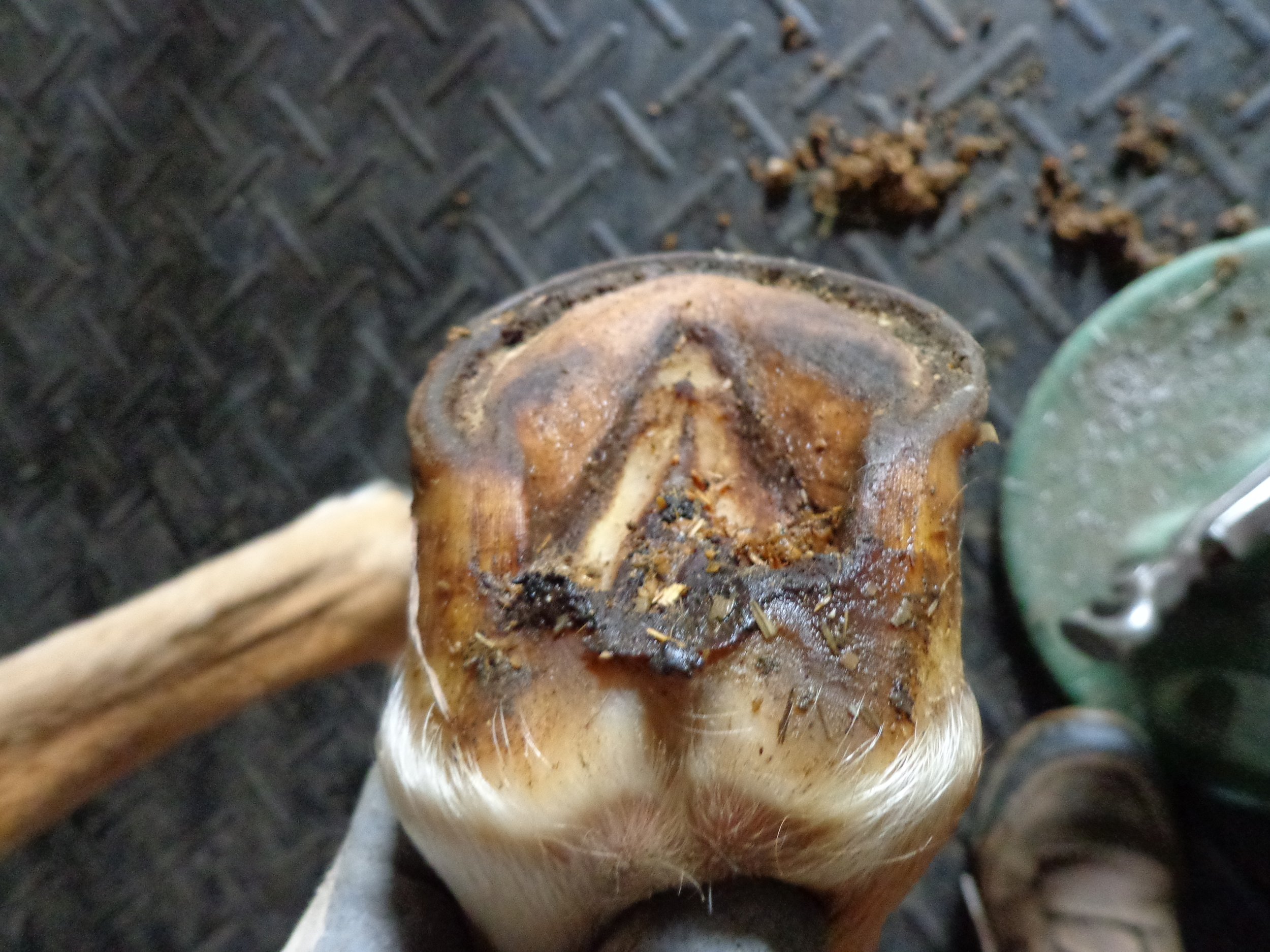
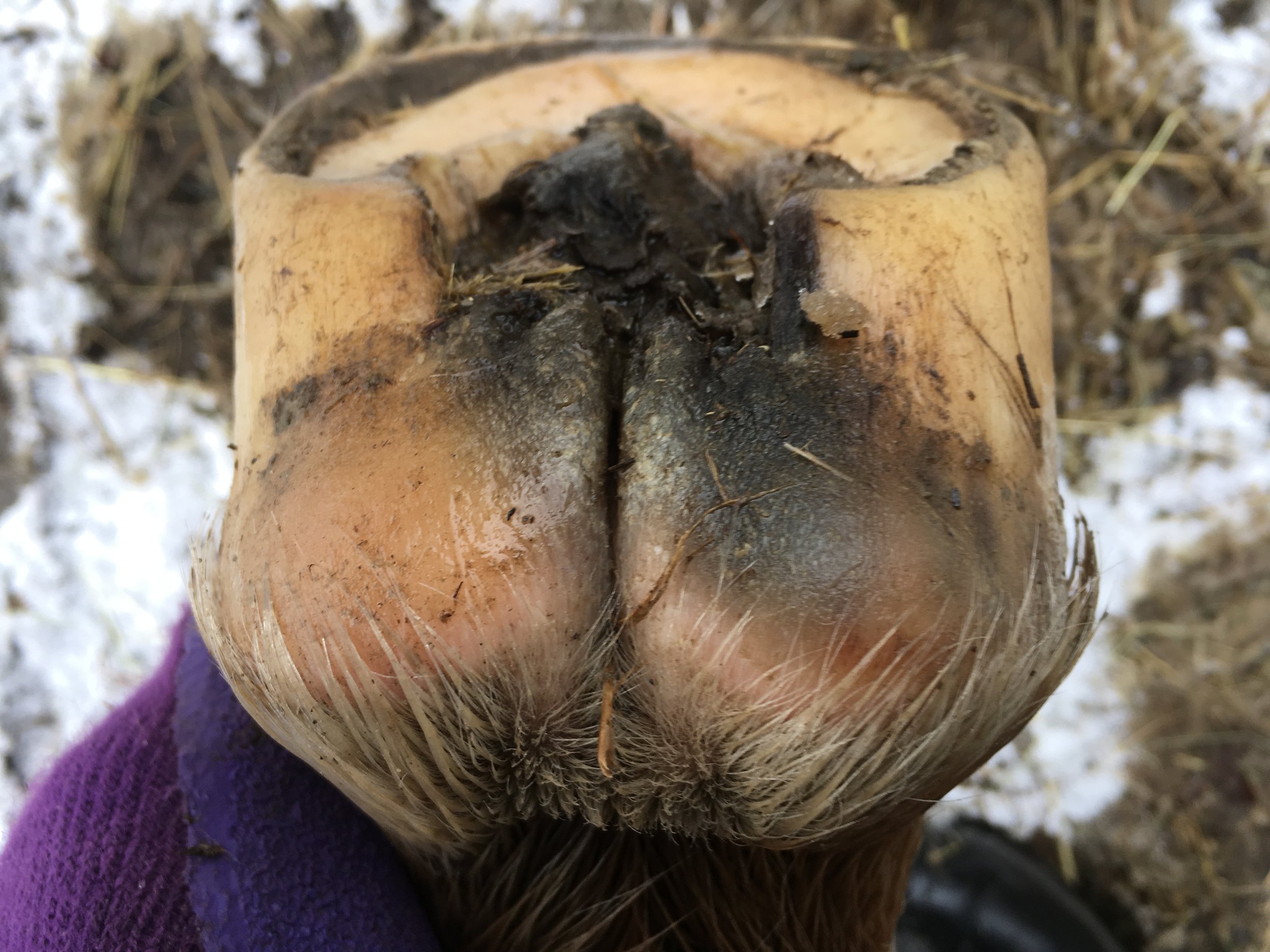
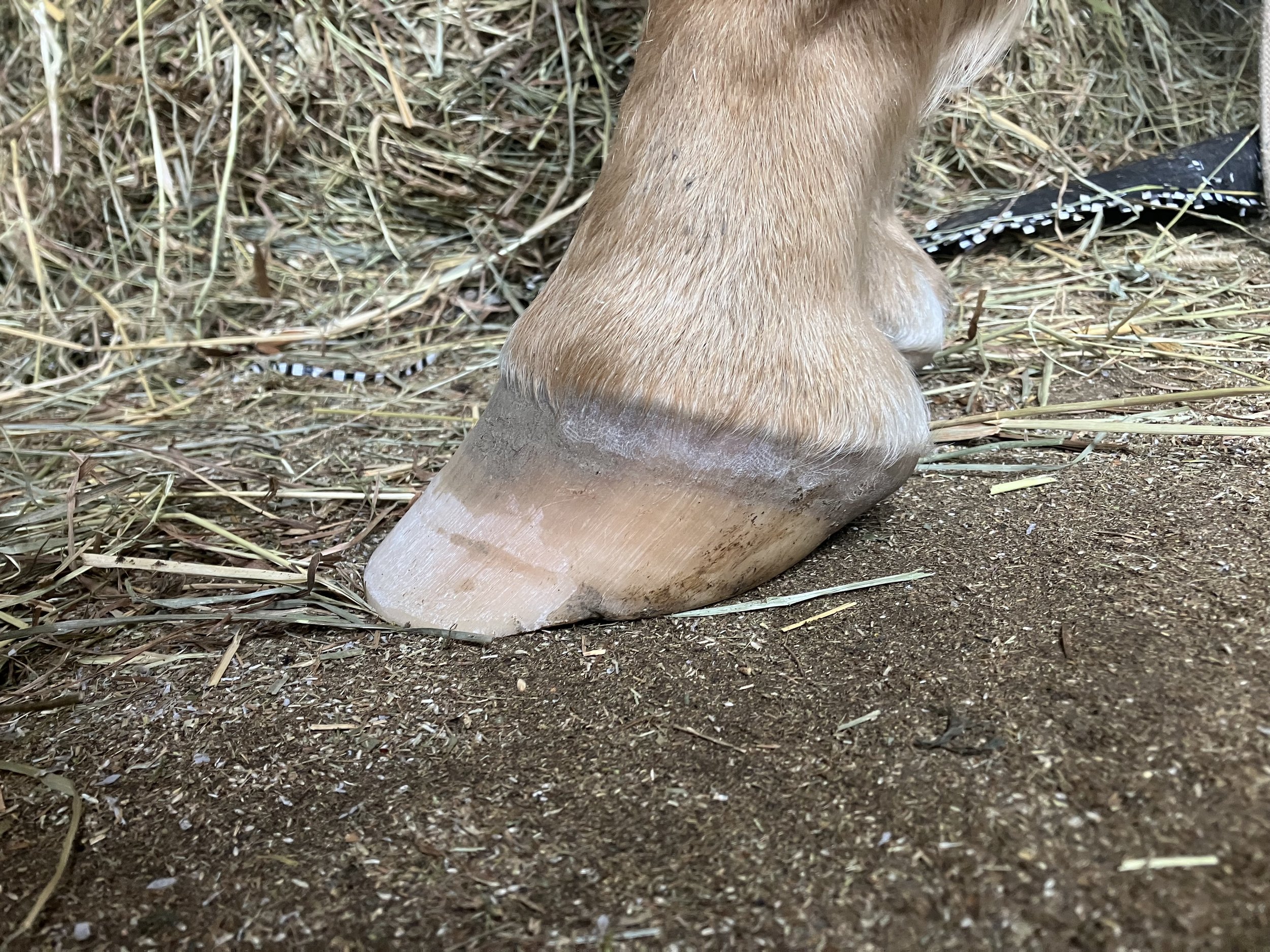
All four of Tack's hooves were atrophied at an infant stage; the hooves did not wear down after birth; the variant capsule angle-of-growth never complemented in the back; the white line was atrophied in all four hooves; both front hooves were contracted from the cornet band down (they looked like crushed “pop cans”). Tack tucked his front legs behind the vertical, braced himself on the lateral side of the hoof capsules and paddled over the toes with both fronts. In the hind he braced with his toes. For the longest time he used to square his toes (the toe wall was always worn pathologically). He toed out with his left hind. The cause for all of this was the unfinished baby hooves with the back of all four hooves undeveloped. Over the course of the healing it became obvious that various hoof coria (especially in the left hind) had been severely compressed and bruised.
There was muscle tension in Tack everywhere (from head to tail bone). He was hiding his withers because he pulled up his shoulders. Hence he was considered "a horse with no withers". He had heat spots on the left side of his neck (where the nuchal ligament was most tight). These were also the points where his mane was pulled over to the other side. Tack’s tail hair was sticking up at the base like a brush; he had no forelocks; the muscles above his eyes protruded; his TMJ was affected (his bite was off, he injured his tongue with his own teeth and held his lips tight for many years).
Based on my travels I landed at my clients place late in the afternoon. We worked inside a barn with insufficient light for taking photos. And to be honest, we had enough on our plate to trim this horse. We eventually began taking photos when the time of my visits changed to mornings.
Tack’s healing journey took an interesting turn when he developed a wide surface crack on his left front hoof in 2017. (This was the area he had leaned on all his life.) Hoof mass increased (his feet got wider) and shifted around the coffin bone as part of 4th dimensional healing changes. The front hooves de-contracted. The crack on the left front hoof closed in 2019, re-appeared in 2022 and closed again in 2023 for good as the hoof found its balance and final position under the bone column of the leg. In 2019 the right front had a massive sub-solar abscess. In 2022 the right front also went through a surface crack for about a year. Internal structures visibly increased in 2023.
In 2019 we observed change in Tack’s hair: he began to grow forelocks; his entire mane flipped over; his tail hair grew out normally. He also let go of all the unnatural muscle effort (muscle tension he was forced to hold all his life due to his unfinished baby feet). Eventually, we could feel and see his withers. He no longer tucks the front legs behind the vertical.
Tack is ridden again. He goes the trails entirely barefoot. He is happy in his body and his soul. At the age of twenty-three (the time when I was writing his story) Tack looks better than ever before.
P.S: In August of 2024 both of Tack's hocks had micro abscesses and he abscesses as well from above the hairline of the left hind hoof. Most likely this was release of ossification because the support was no longer needed.
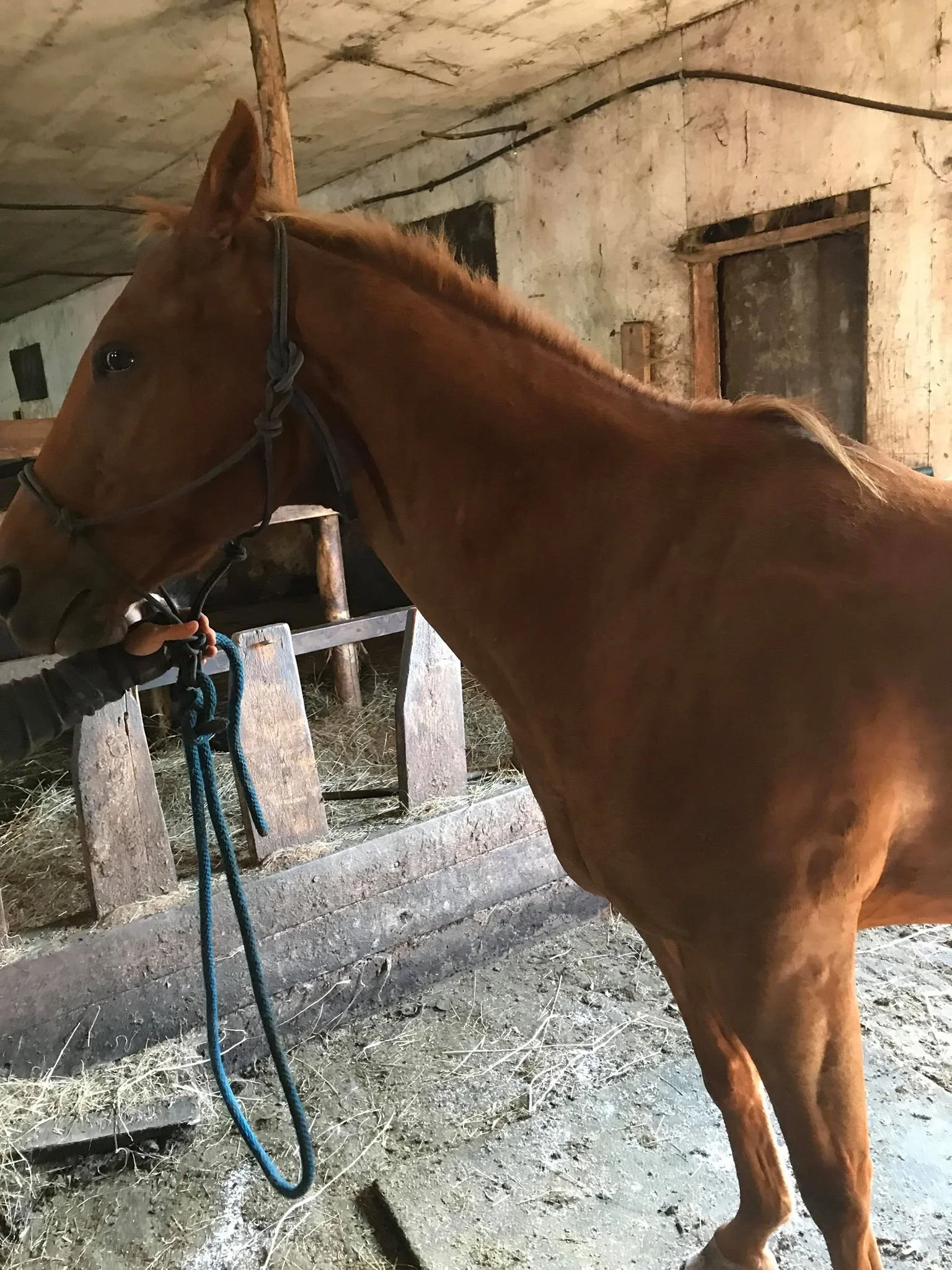
Tack tucked his front legs behind the vertical for many, many years.
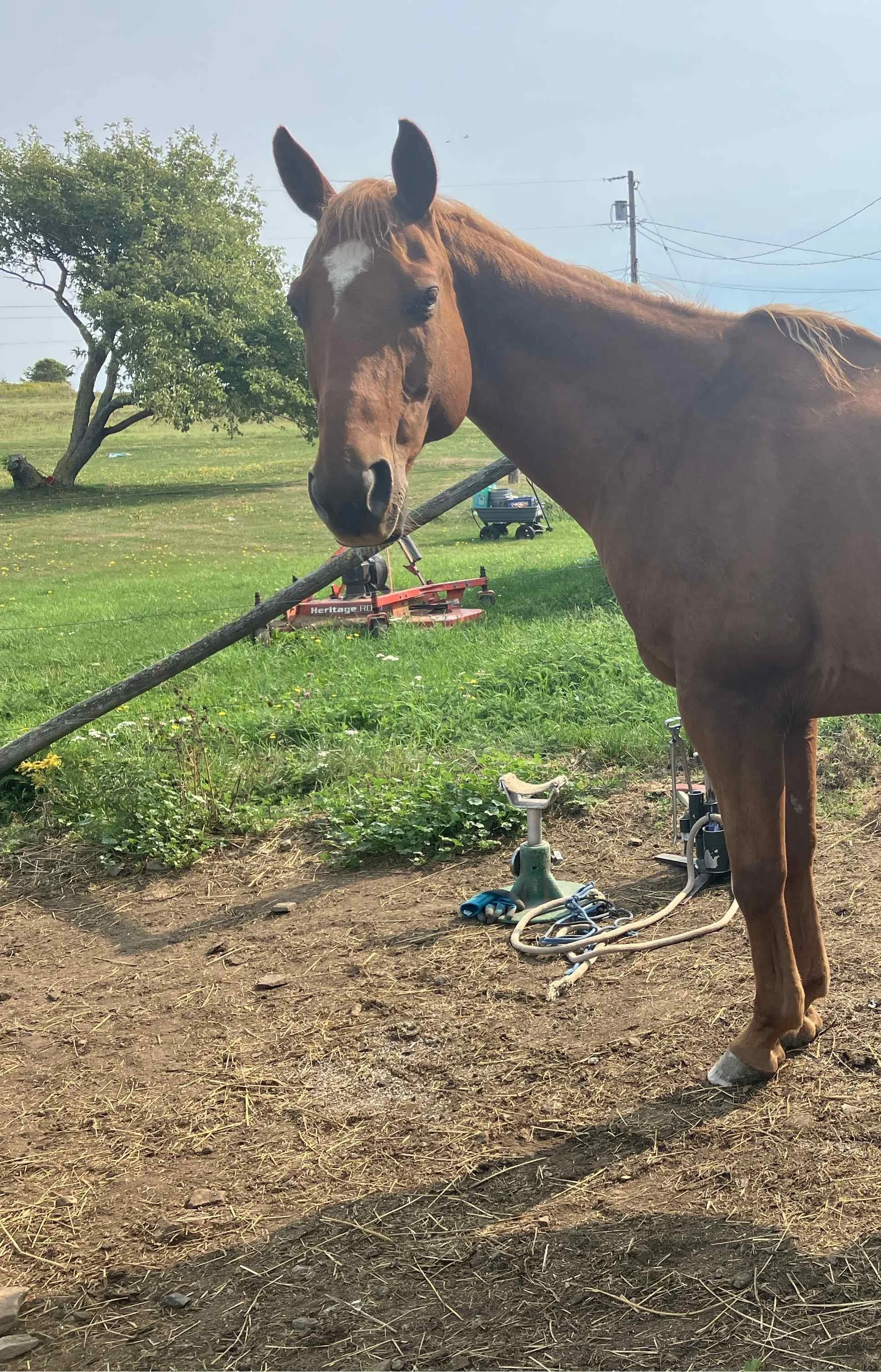
September 2025
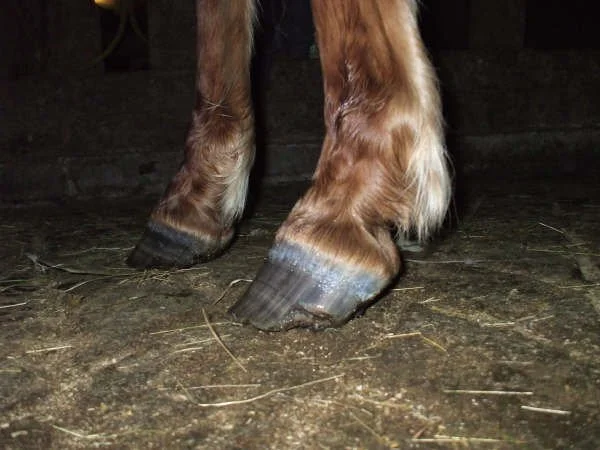
Left front halfway in with the first divergent hoof after I started trimming him
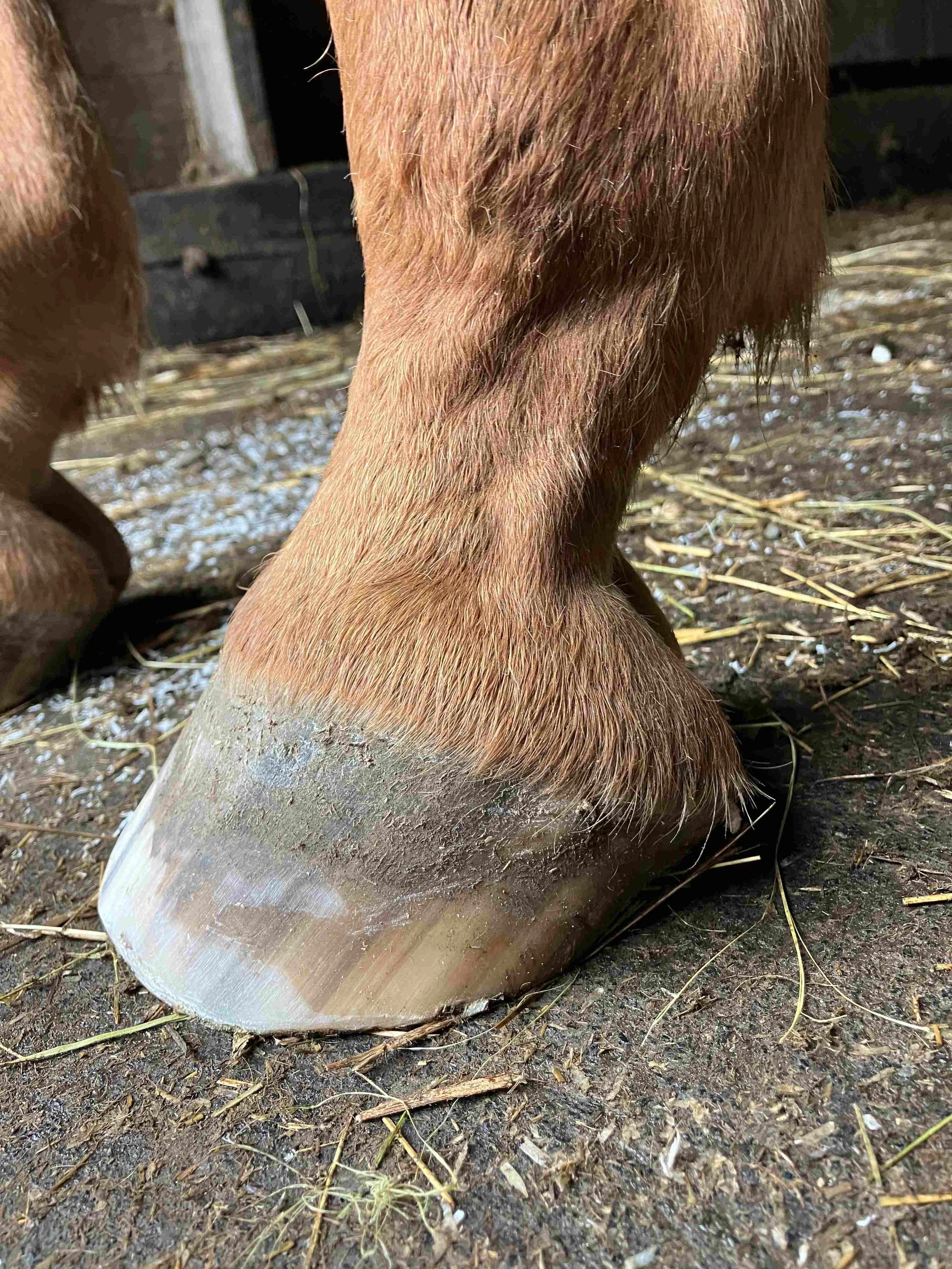
Left front post-trim September 2023
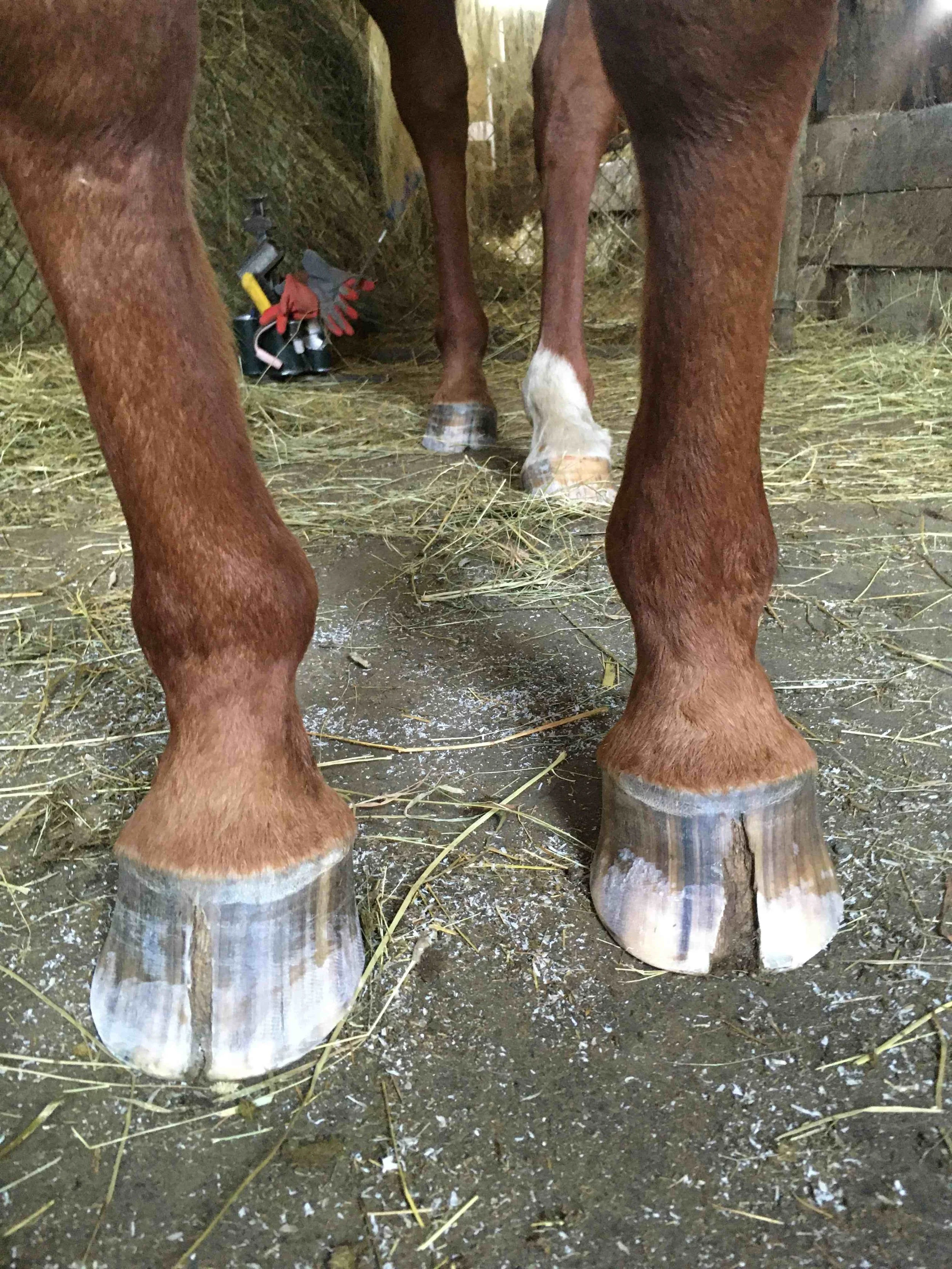
Fronts post-trim October 2022 (at first a wide surface crack showed up on his left front hoof in 2017; later he had a crack on both fronts indicating the areas he overloaded his toes all his life)
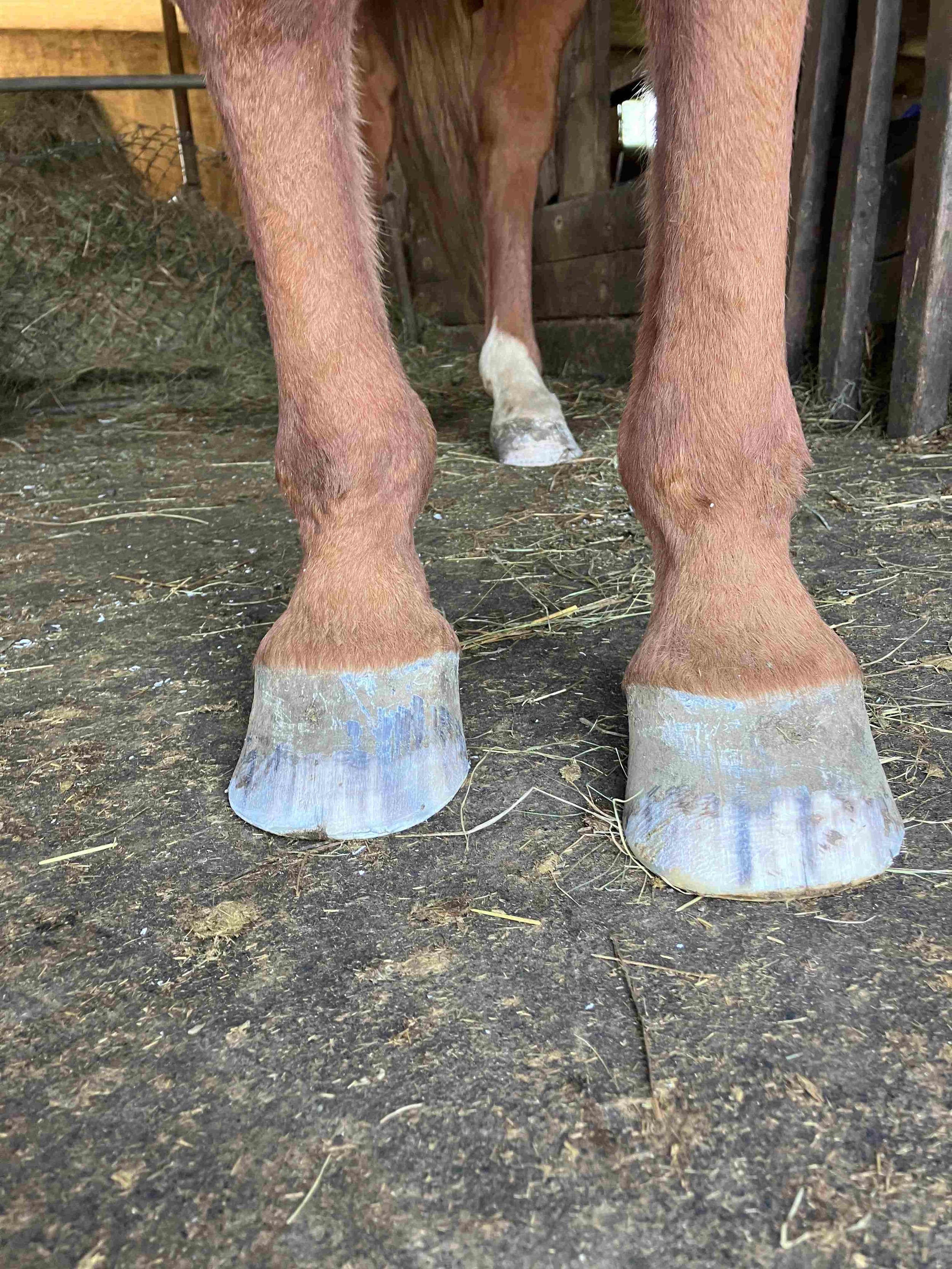
Fronts post-trim October 2024
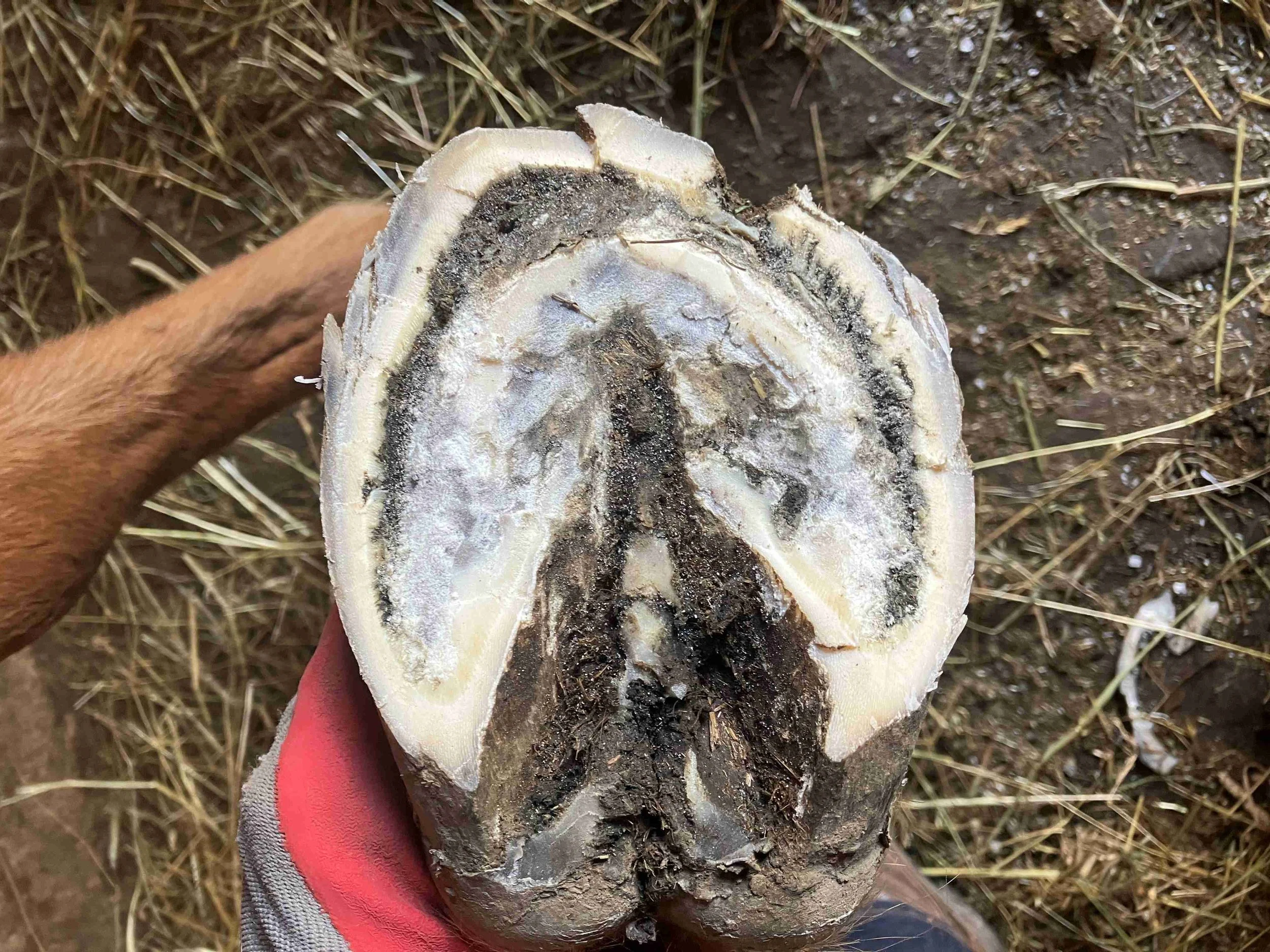
Left front mid-trim June 2023 showing the damage he did to his toe wall
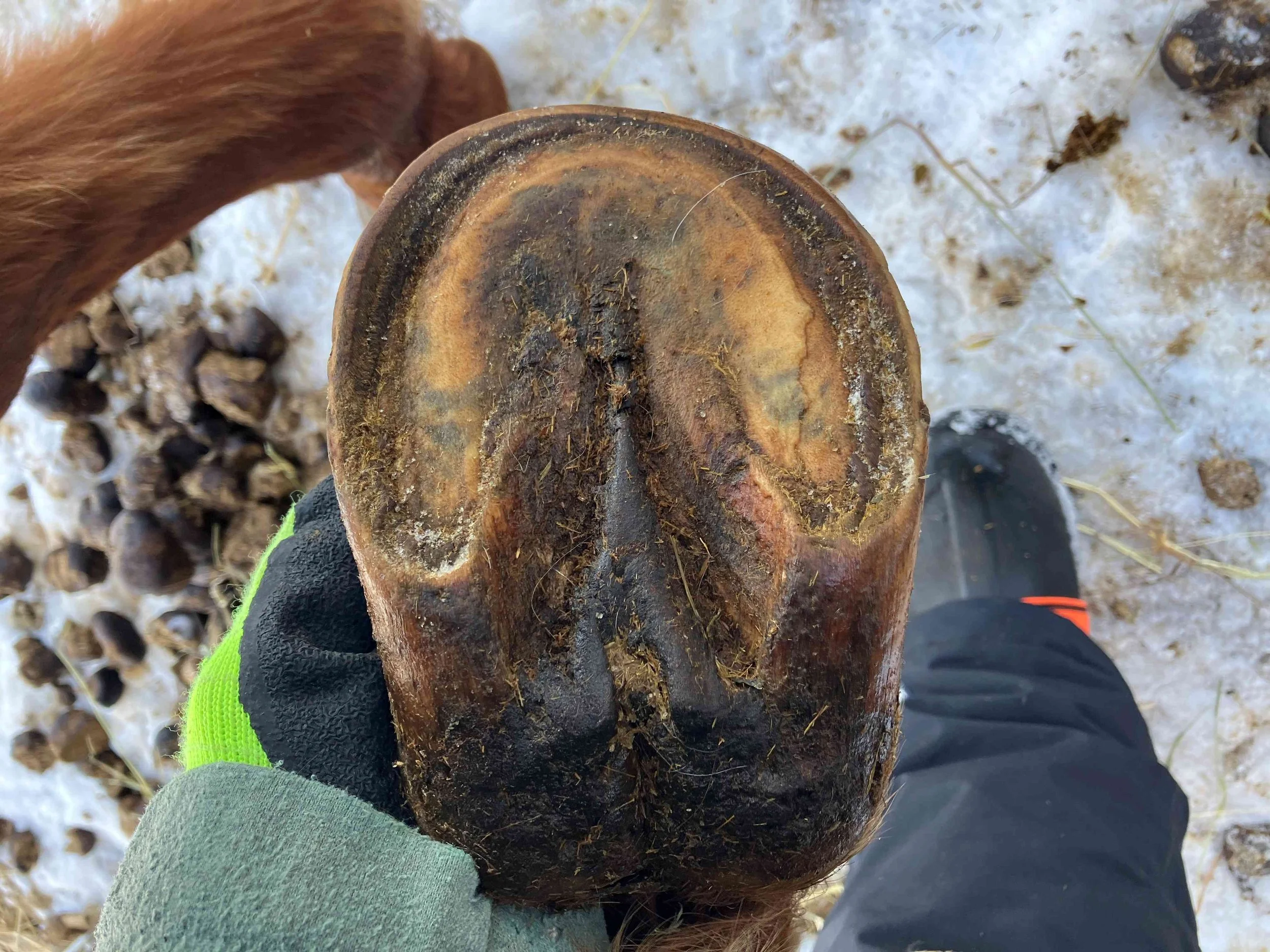
Left front pre-trim March 2026 after a long winter stretch of three months for trimming
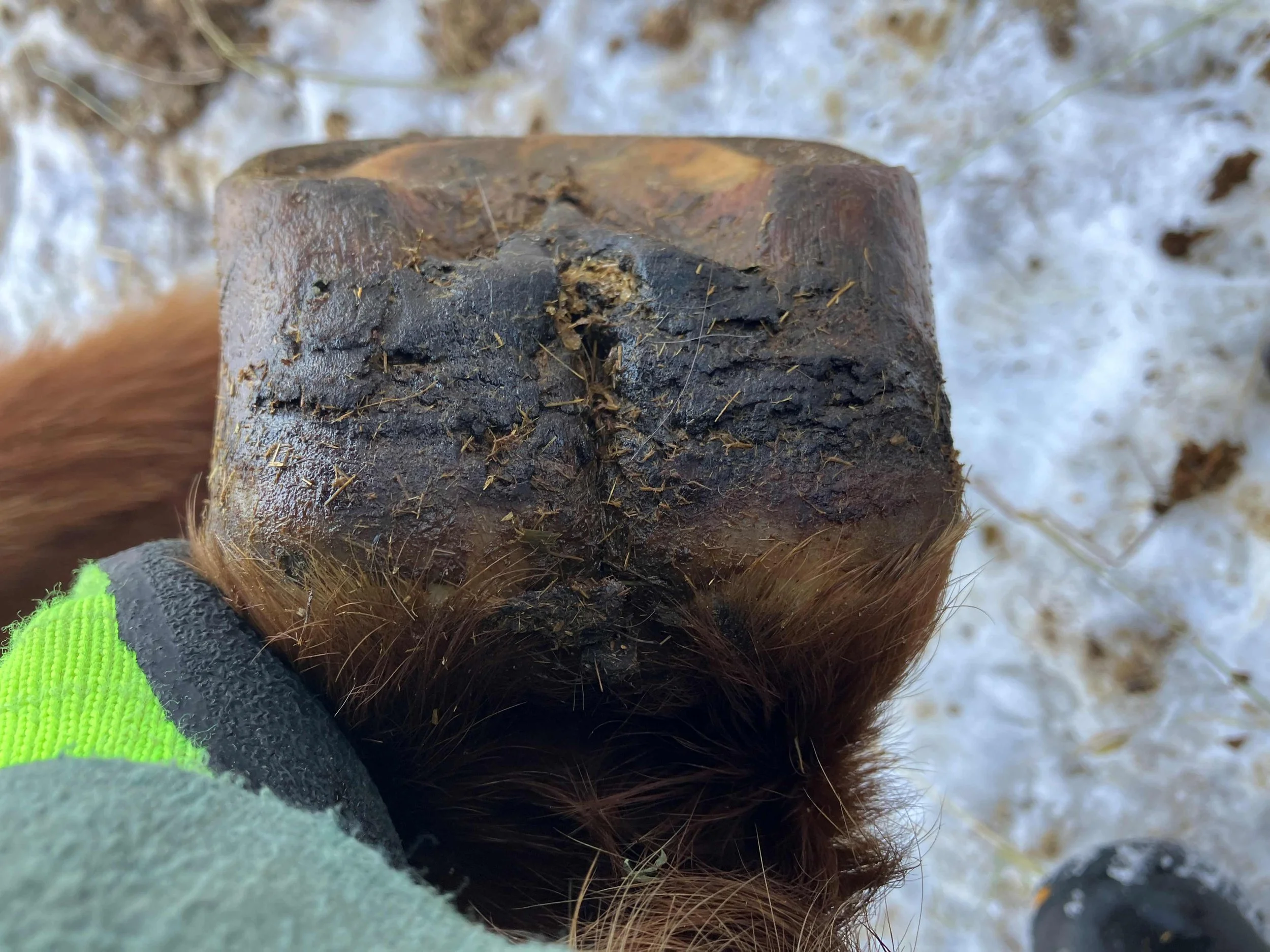
Left front pre-trim March 2026 after a long winter stretch of three months for trimming
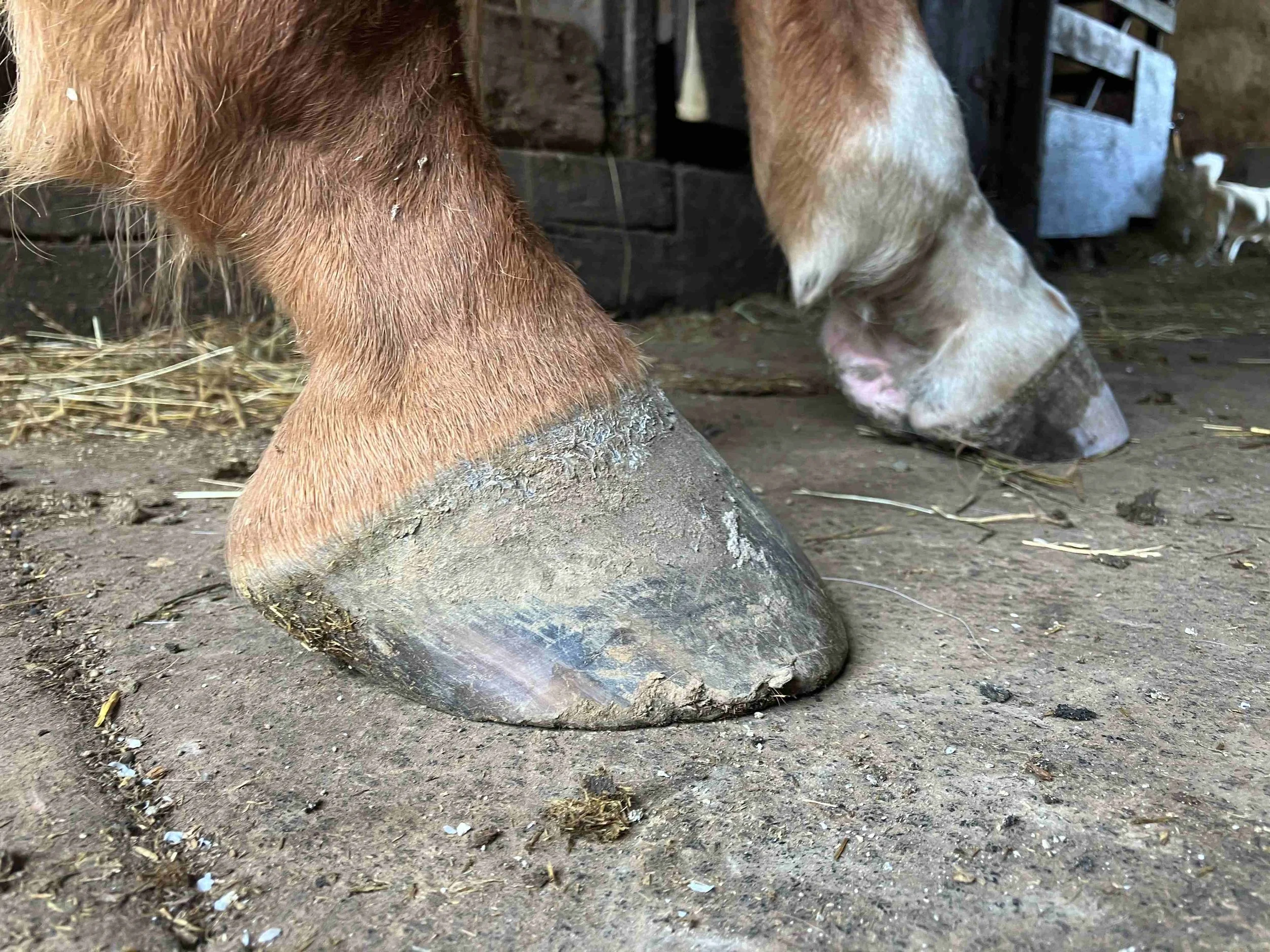
Right hind pre-trim June 2023
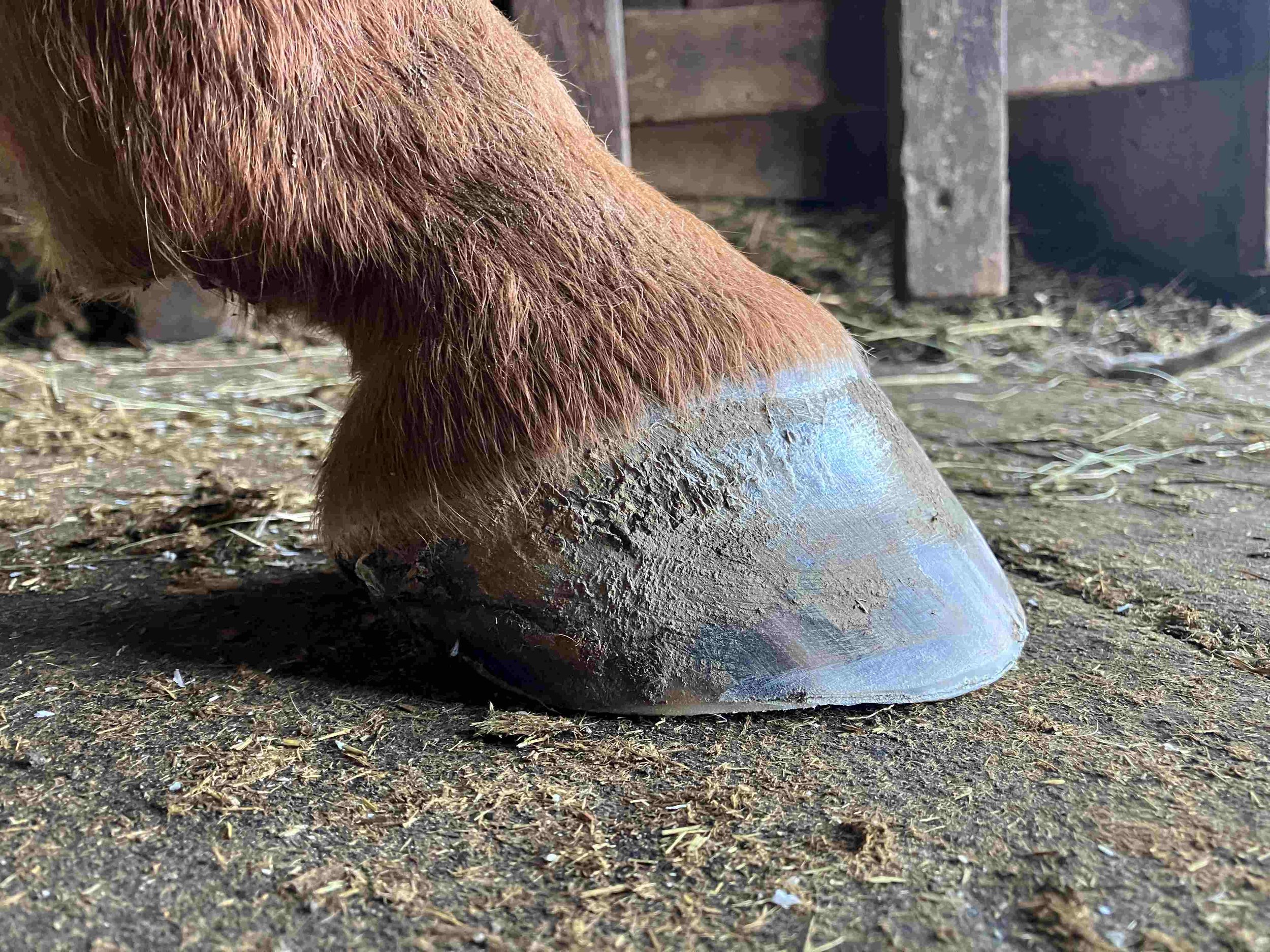
Right hind post-trim October 2024 — (following life sole plane) the natural arch in the quarters has emerged as the back of the foot is finalizing ; toe length is getting shorter; toe angle is getting steeper
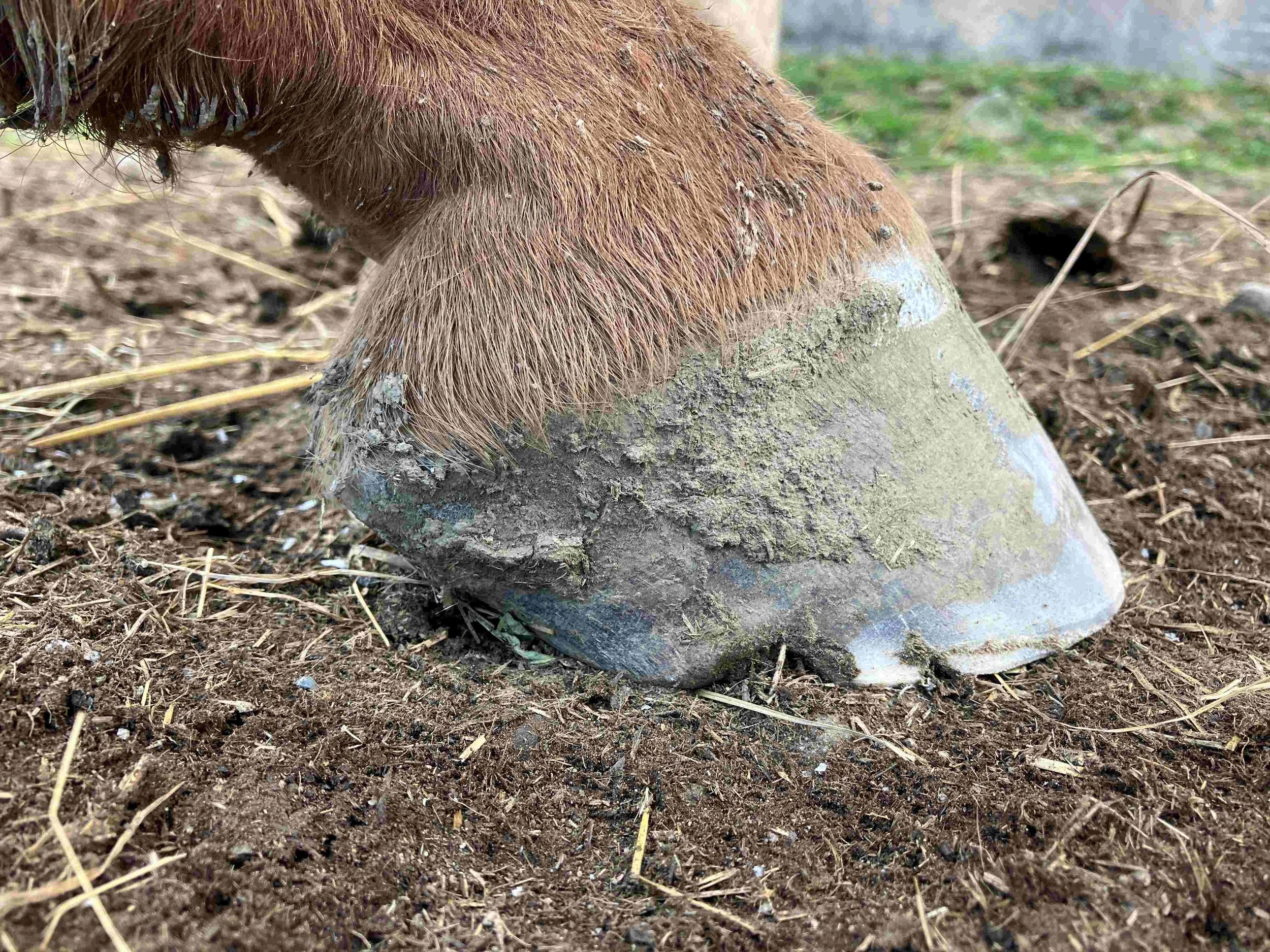
Right hind post-trim June 2025 — more healing work is happening in the back of the foot; toe length is getting shorter; toe angle is getting steeper; the natural arch in the quarters is increasing;
photos: Gudrun Buchhofer
Stay tuned for the upcoming cases (under my care for up to 20 years) in this blog series as a replacement for the unpublished part III: Mission Impossible of my trilogy Hoof, Body & Soul.
What did all my client horses over the last 20+ years have in common? They needed to heal from atrophy of the back of the foot as well as other atrophied hoof structures.
Q: Why do we need to change the upbringing of our baby horses and donkeys? A: To prevent senseless suffering.
Gudrun Buchhofer