Hoof, Body & Soul, Part III: Mission Impossible, unedited, by Gudrun Buchhofer. Blog 83, case # 83
CHAPTER 1
Atrophy, the fundamental cause for most all hoof pathology and upper body injuries
Body & Soul
Case # 83
Appaloosa mare
trimmed for almost ten years from 2009 until 2019
This mare was awarded a prize for her conformation as a filly when she was five or six months old. When I was called out for trimming a year later she presented a very sad picture. I found her in extreme muscle tension and discomfort from head to tail. The bones of her legs were literally all over the place. The hind end was very weak. She braced with her front legs. She kept her head dropped. The filly was stuck with unfinished and atrophied baby hooves.
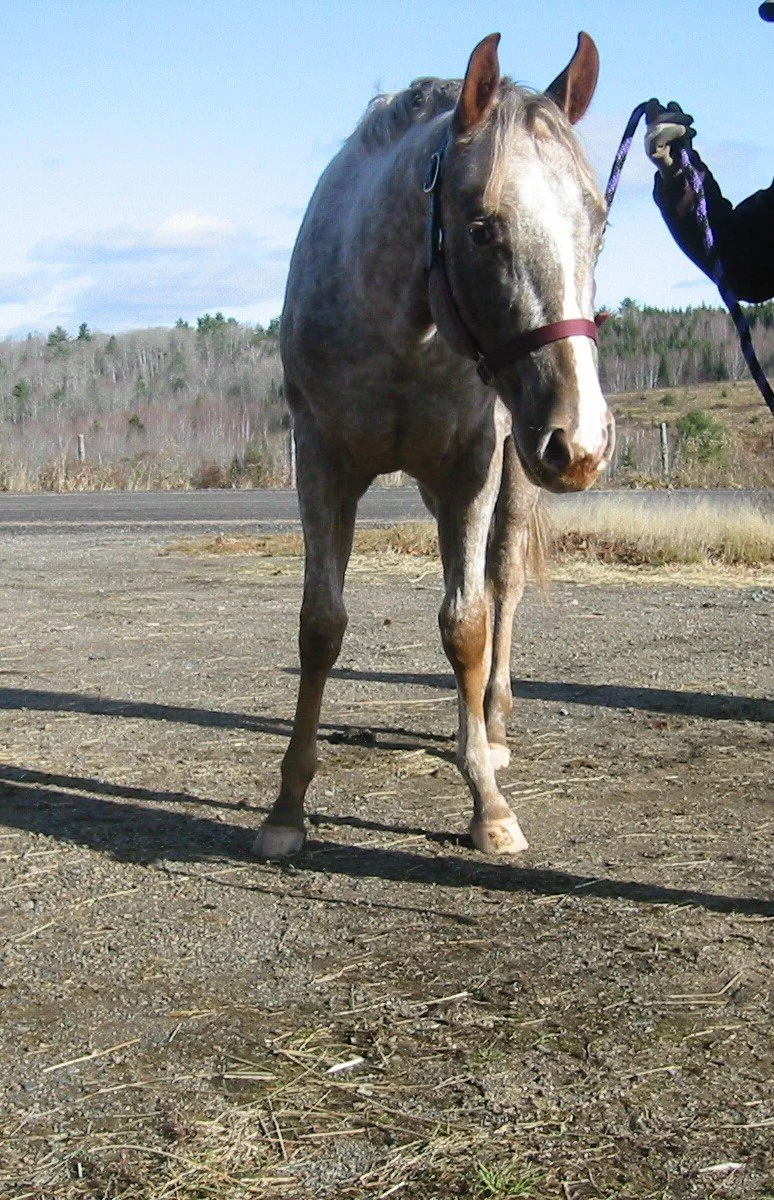
November 2009
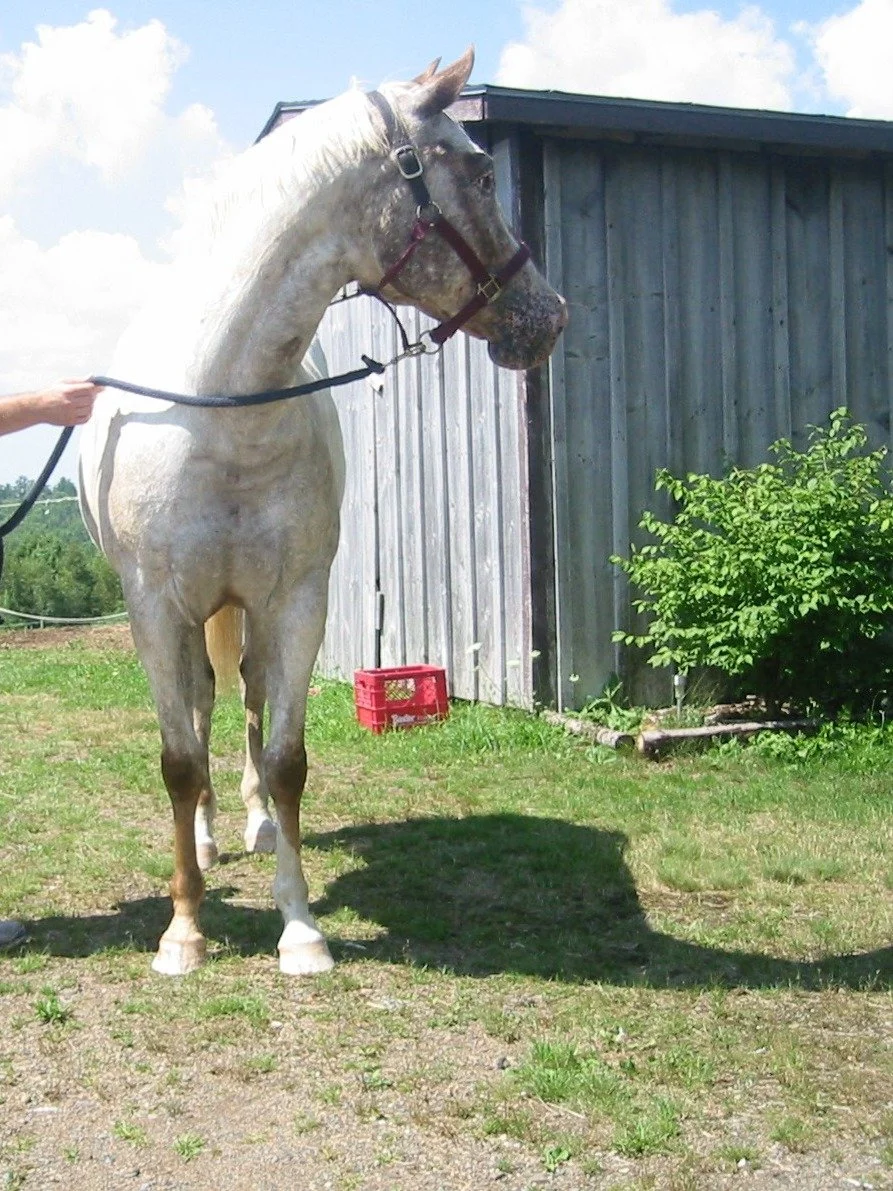
August 2012
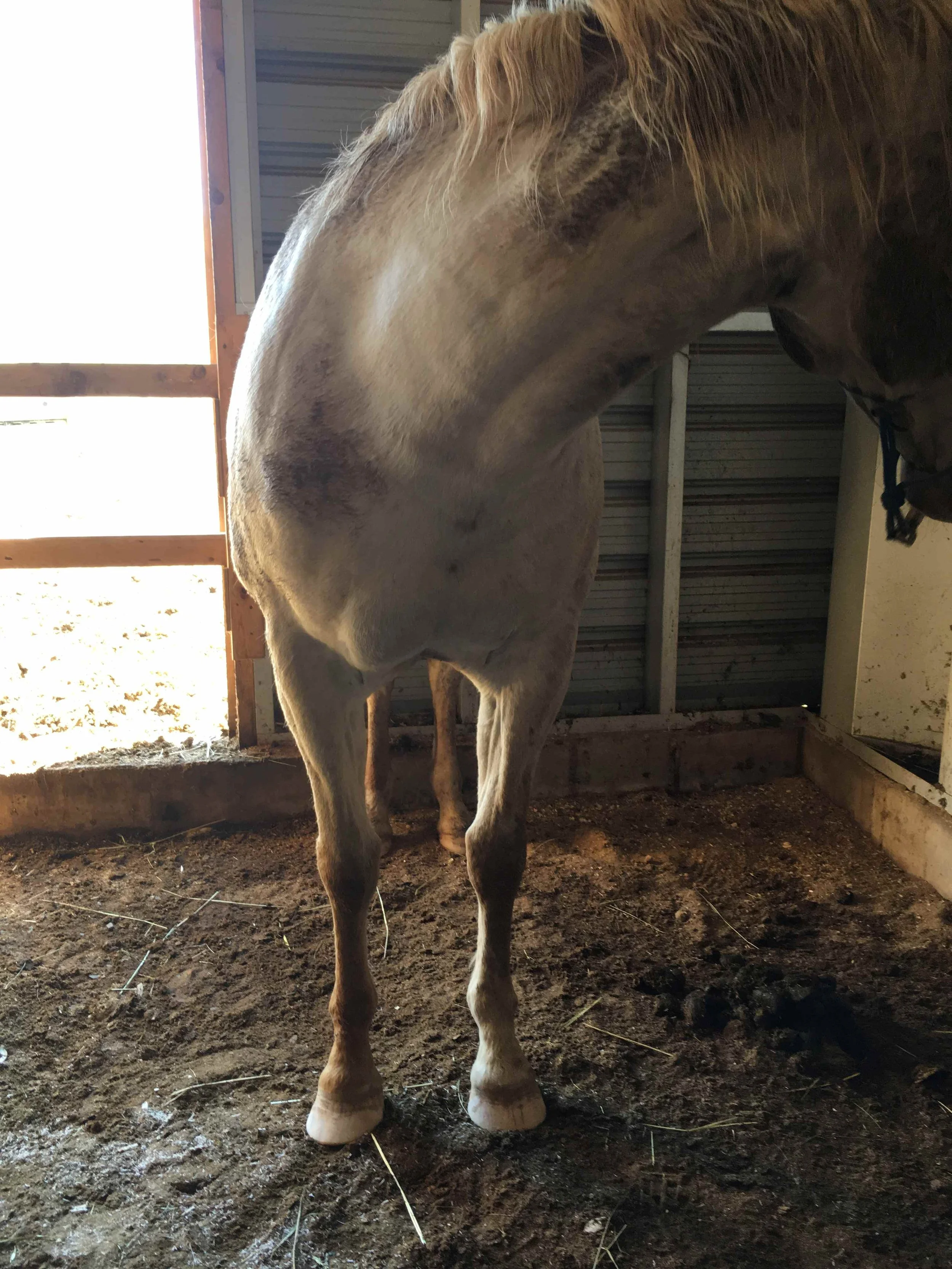
May 2017
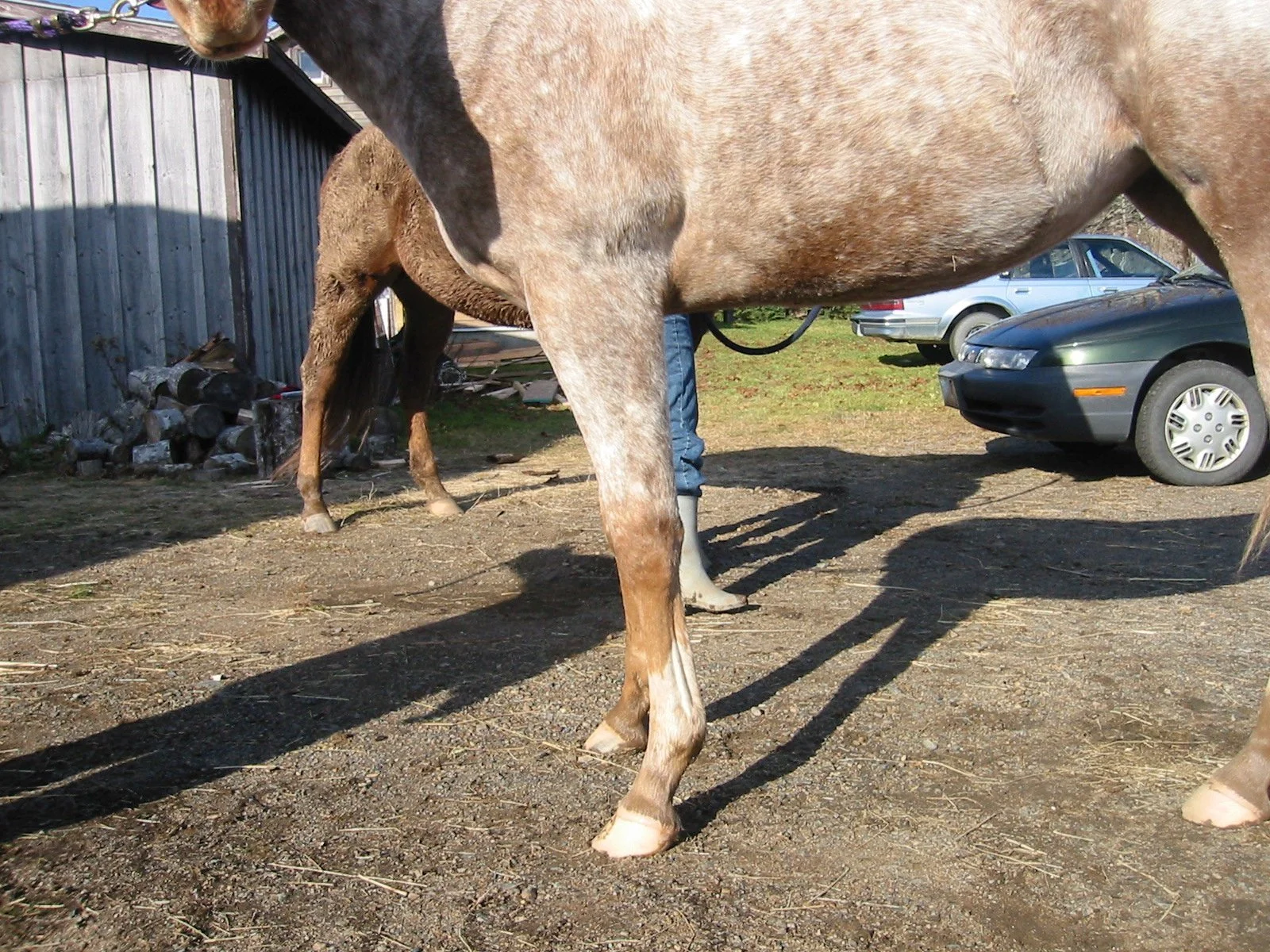
November 2009 — pasterns still long and stretched (like after birth)
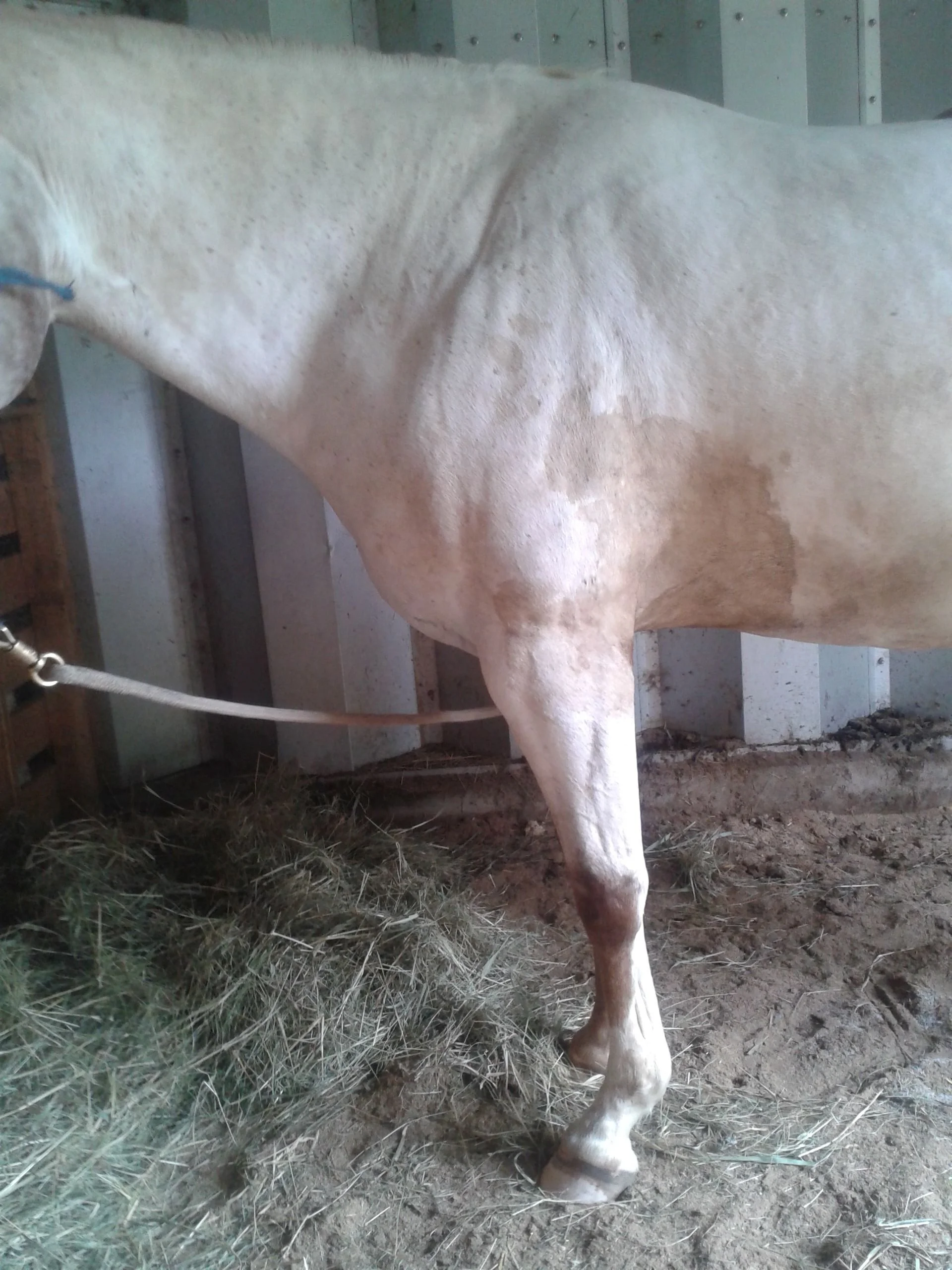
July 2017
Here are some of my notes about her (not in any particular order):
- tension in the tail bone
- very little tail hair (at some point her tail hair broke off almost at the end of the tail bone; it did regrow nicer and thicker in the end)
- no forelocks
- wrinkles above eyes (we always felt she had headaches)
- tension along the nuchal ligament
- tension in the TMJ
- no withers (i.e. she had pulled up her shoulders so the withers were hidden)
- the entire upper body over muscled
- horse holding herself up via muscle effort
- hooves not supporting the bone column
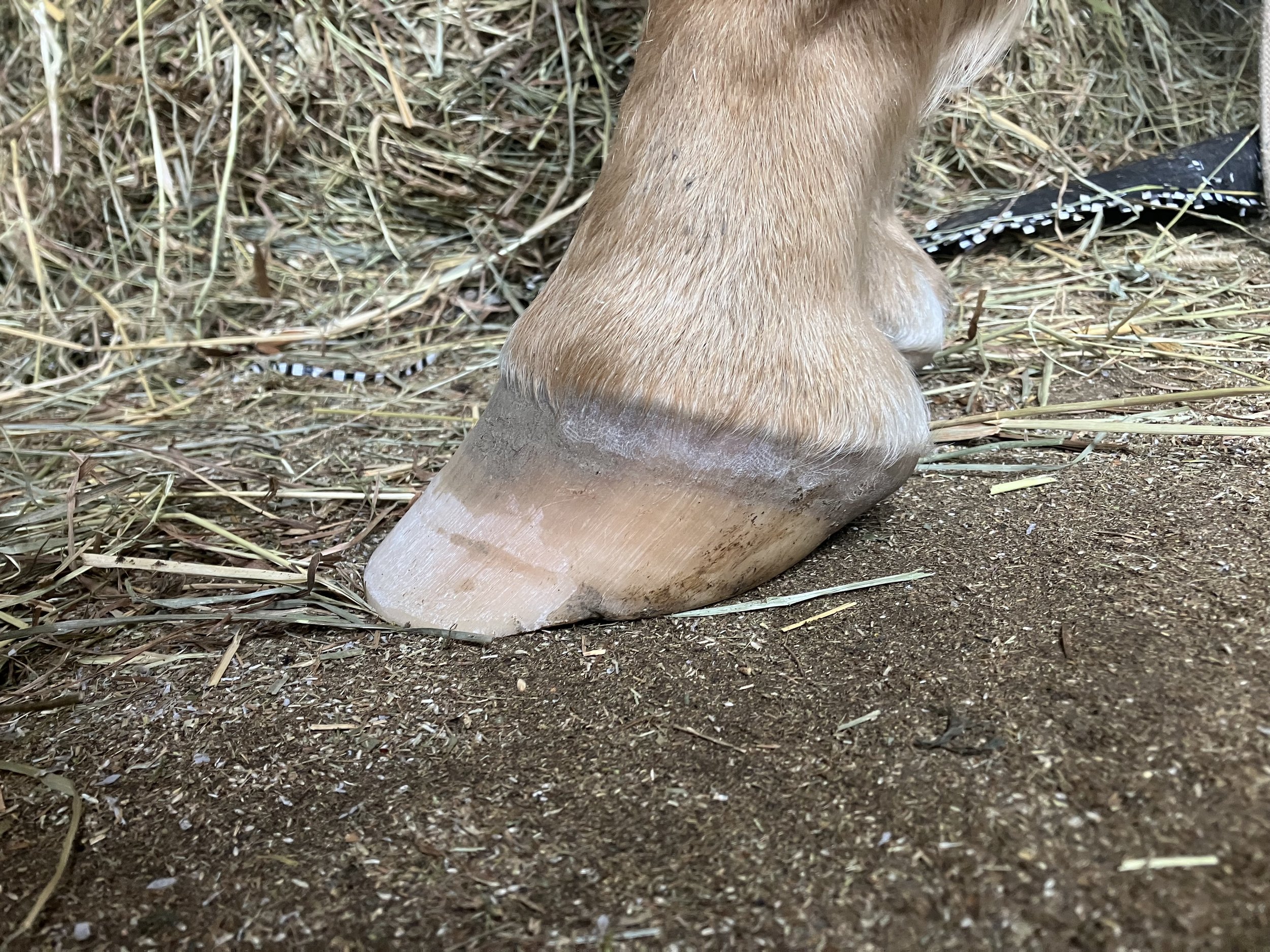
- pasterns still long and stretched (like after birth)
- toes of both hind hooves were “pointy” (like after birth)
- difficulties to pick up her feet especially the right front; I have to literally brace against her with all my strength
- very weak fetlocks in the hinds
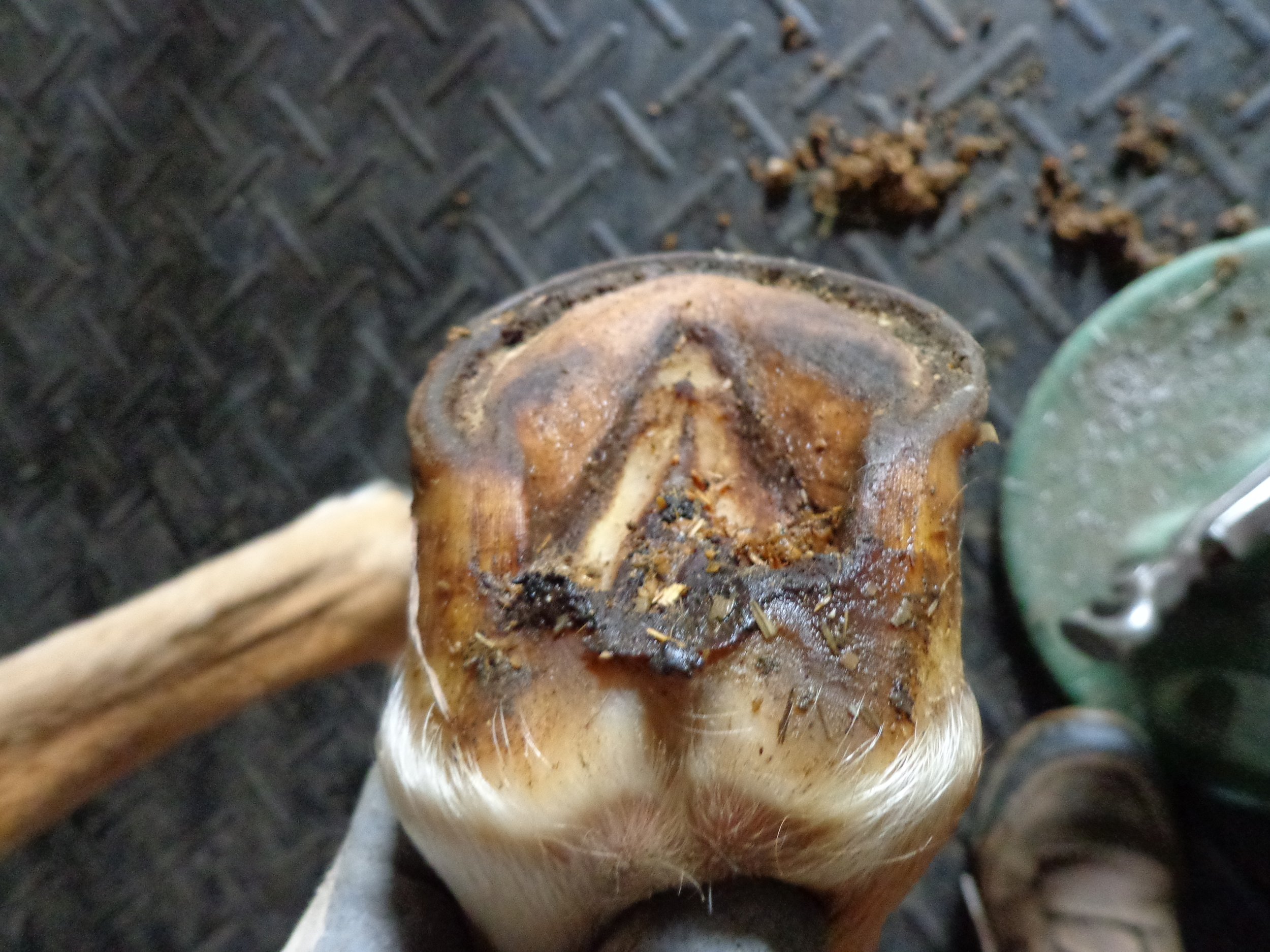
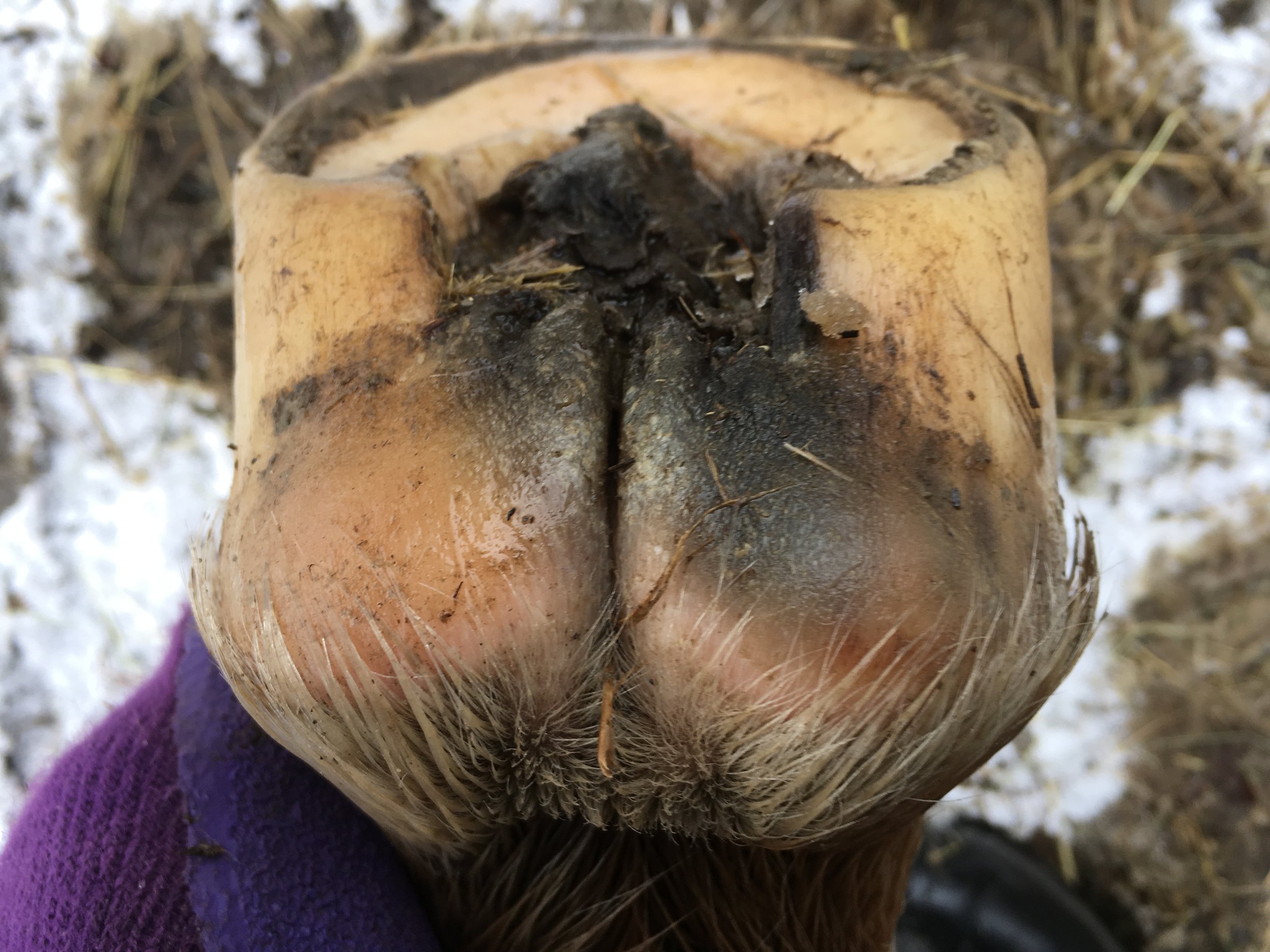
- atrophy of the back of the foot (frog, bulbs, internal structures); atrophy of the sole; atrophy of the white line
- weak internal structures
- stress cracks all over the hoof capsules
- the bottom of both front hooves had a strange cup-shaped form — the way I have seen in Jensen's right hind (Blog # 3) and Katie's right hind (Blog # 34); this had nothing to do with beautiful concavity as something was very off with the looks.
- the white line in her hooves was very strange as well; it was of a more glue-like or rubbery texture. It was not like the lamina from a healthy white line. It also had a strange orange colour (different from a yellowish white line)
- the hooves never gave excess wall to trim; it was almost like they never grew much up until 2017
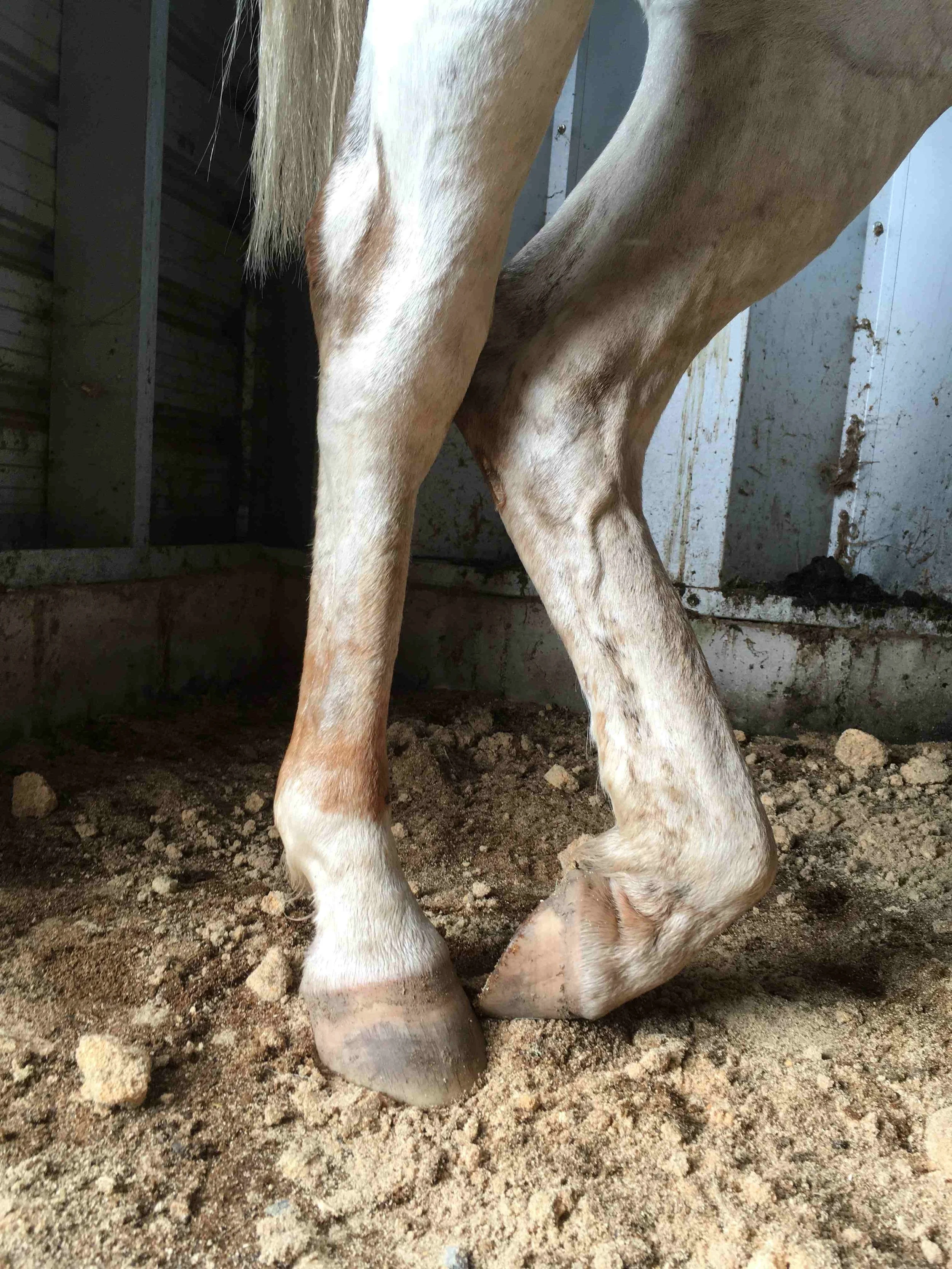
Very weak fetlocks in the hinds — she often rested the hind legs like this
The mare had several abscesses during the healing time releasing traumatized tissue. In 2016 huge chunks of hoof wall broke off as a new and divergent hoof was growing down with a different healing angle and hoof length. There was a major healing breakthrough in 2017 = eight years after I started trimming. True heel emerged from further back on the medial side of the left front in May of 2017. There was flaky sole to be removed and wall to be shortened in fronts and hinds. New bulbs emerged from further back. Some activity happened with the white line. It appeared the white line was coming to life. Again true heel emerged from further back in May of 2018, this time on the lateral side of the left front. The variant capsule angle-of-growth in the back of the feet completed in 2018 (a step that should have happened in the first months of her life!); frogs and bulbs filled out; internal structures thickened. The withers could be felt in 2018 which was a moment of time for a happy dance for us. The mare had finally dropped her shoulders. At some point her entire tail hair broke off at the end of the tail bone. It regrew healthier and thicker in 2018.
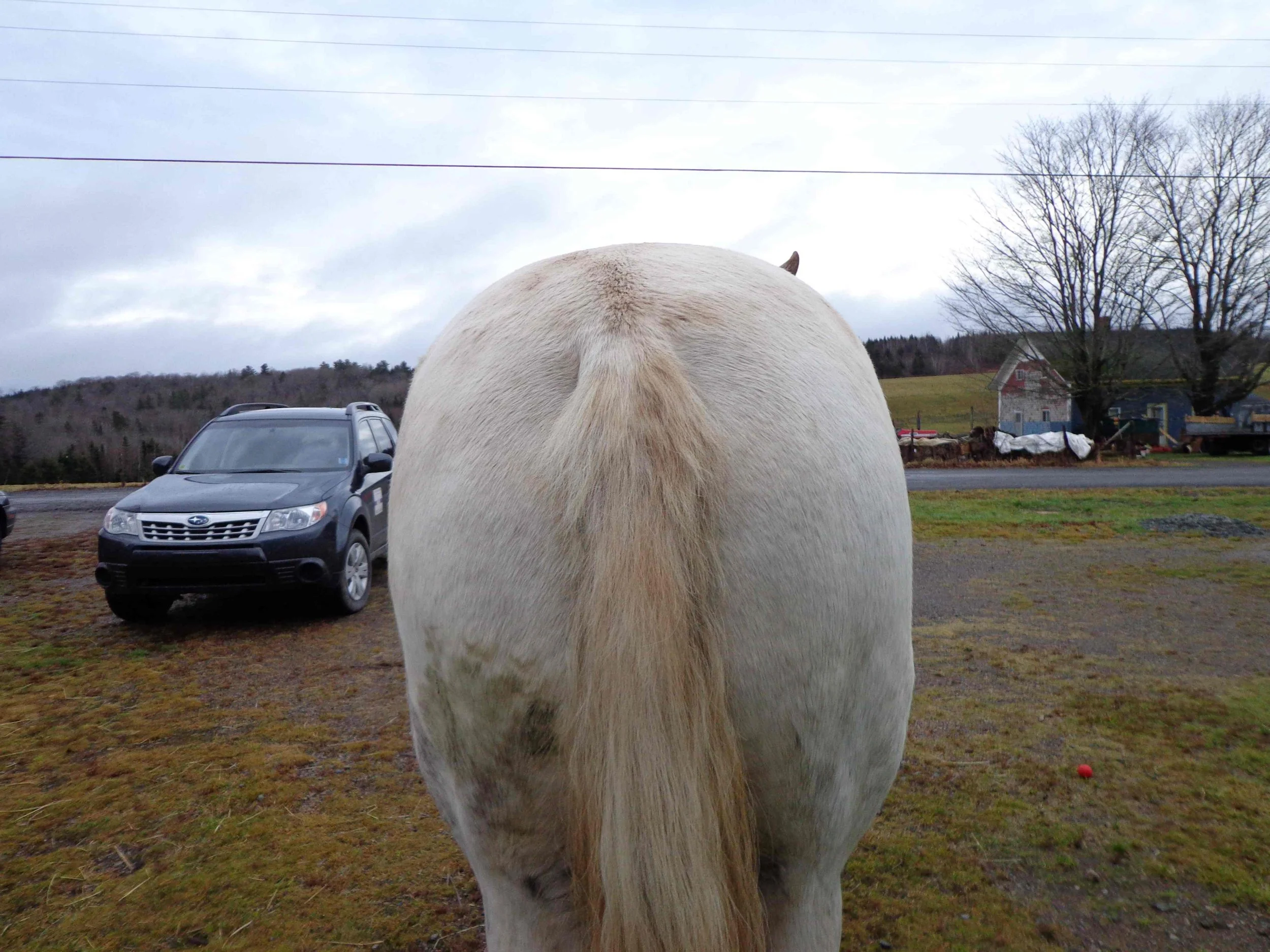
December 2013
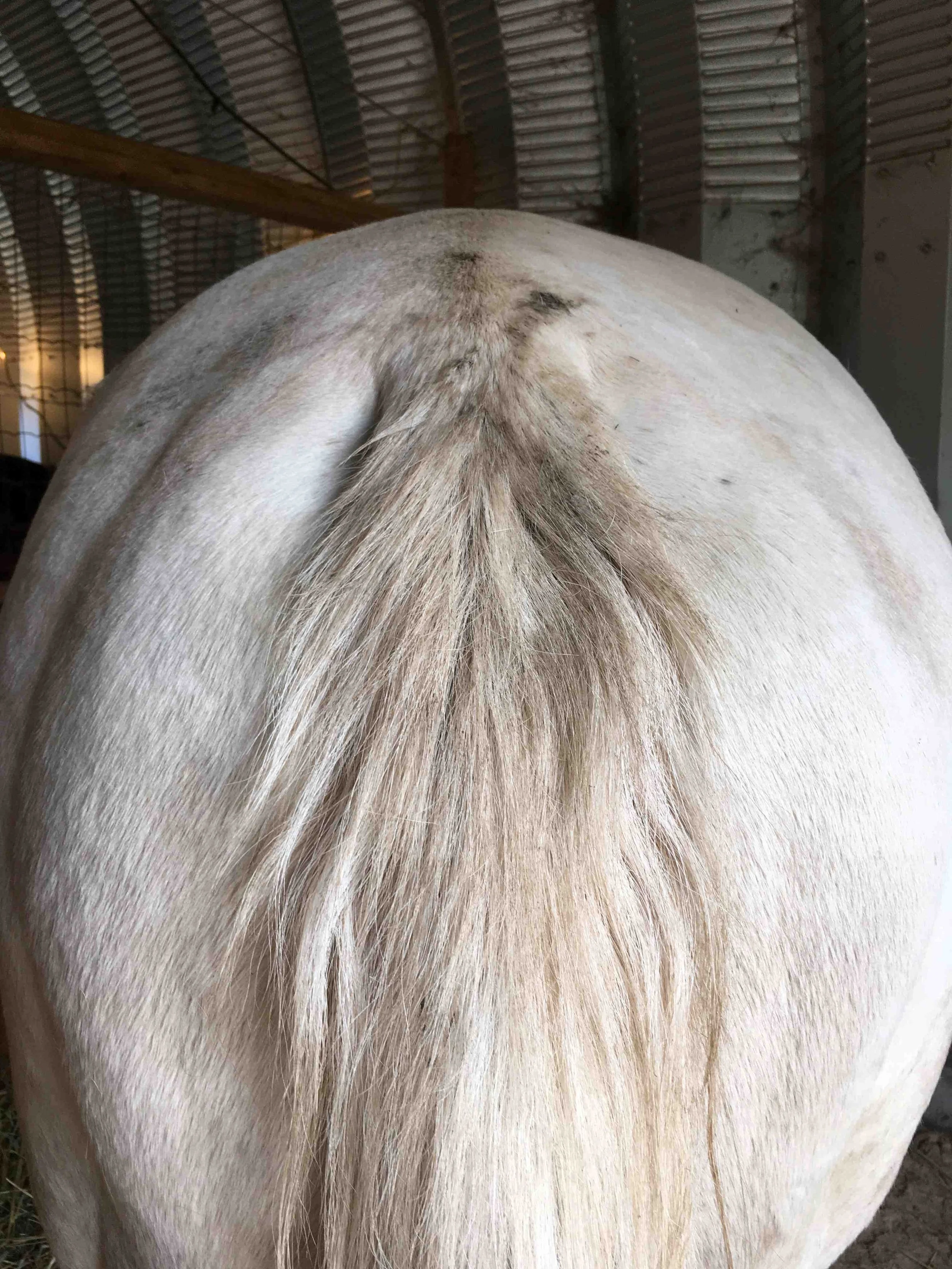
May 2018
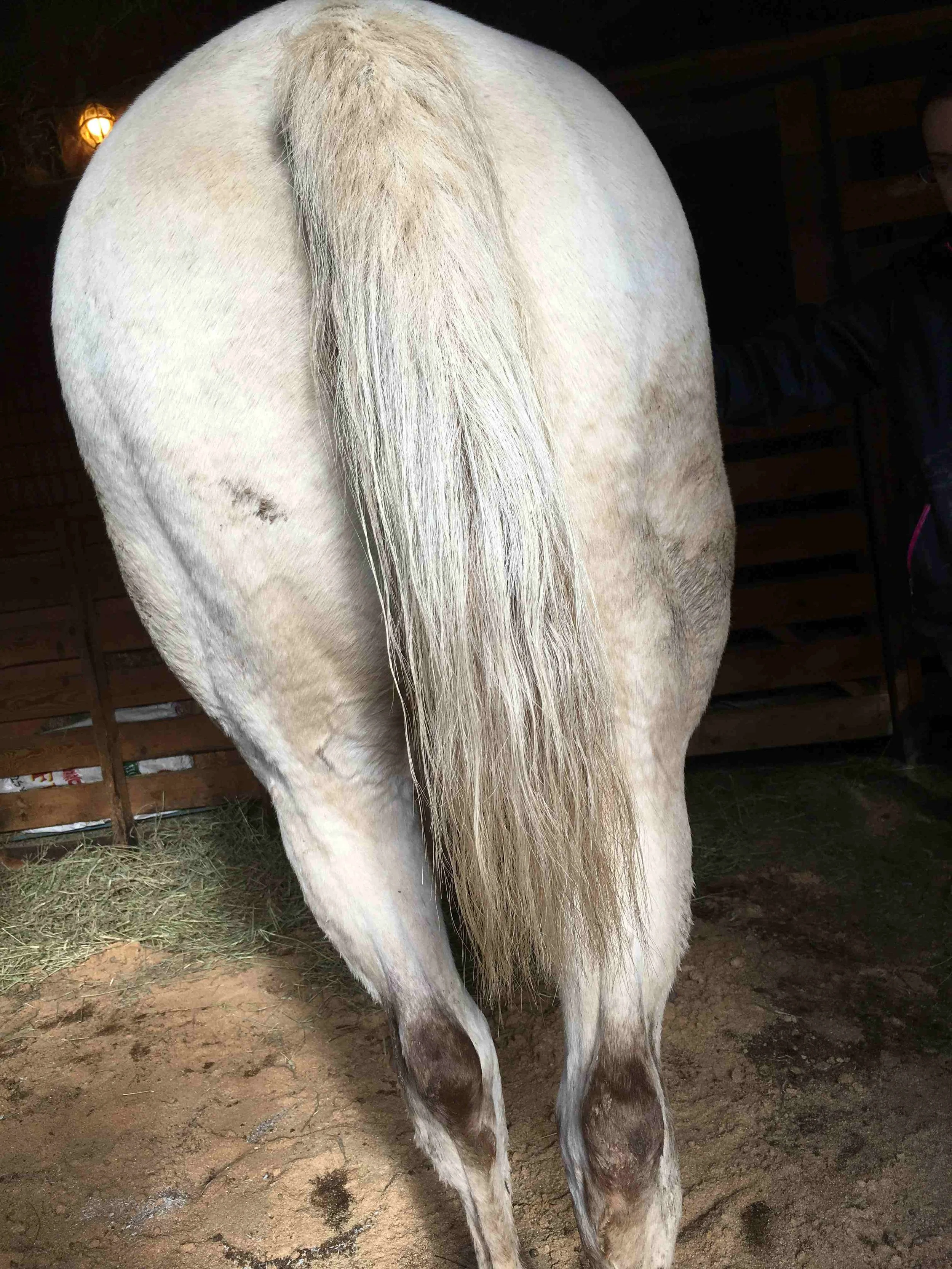
November 2018
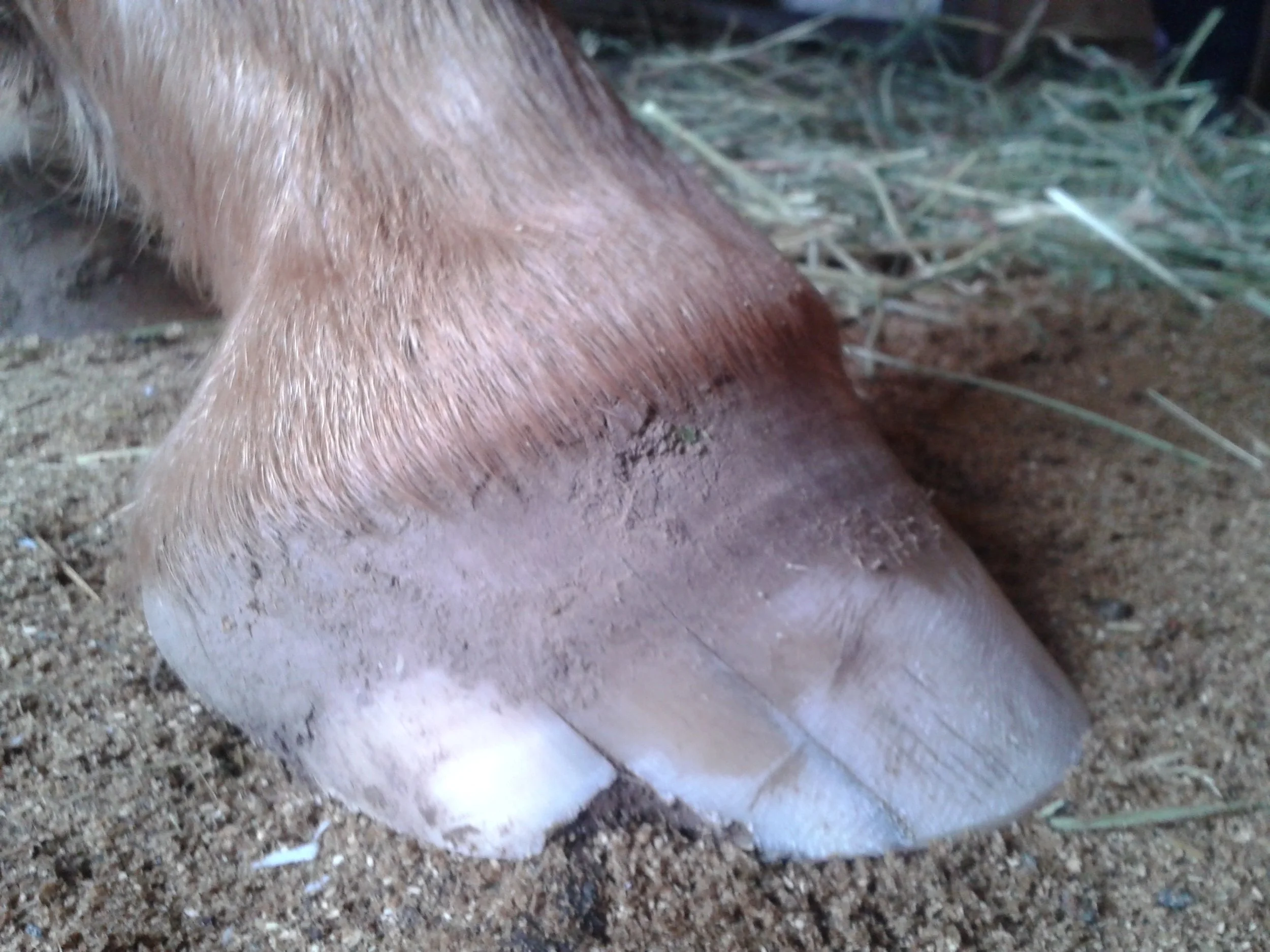
Right hind post-trim November 2017
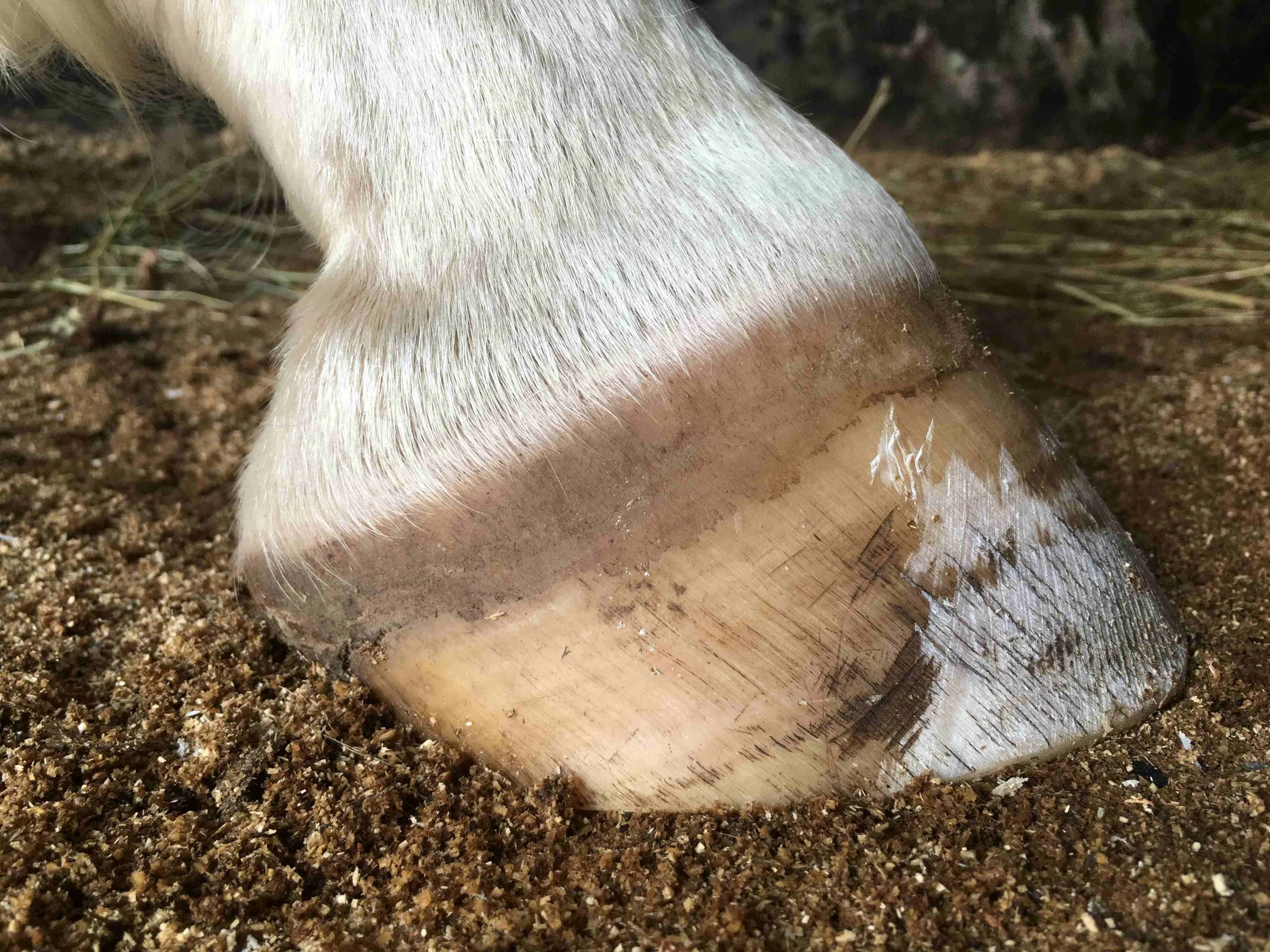
Right hind post-trim August 2018 — the variant capsule angle-of-growth in the back of the feet completed in 2018; a step that should have happened in the first months of her life! Toe length is shorter and toe angle is steeper than before. This is a result of the increase in internal structures = pushing up the back of the coffin bone in to a healthier position.
I trimmed the mare for almost ten years. Besides a few times while away for training she has never been ridden. She lived outside 24/7 in the company of another horse.
Due to circumstances in my clients' life the horses were re-homed — the mare remained a companion horse.
photos: Gudrun Buchhofer
Stay tuned for the upcoming cases (under my care for up to 20 years) in this blog series as a replacement for the unpublished part III: Mission Impossible of my trilogy Hoof, Body & Soul.
What did all my client horses over the last 20+ years have in common? They needed to heal from atrophy of the back of the foot as well as other atrophied hoof structures.
Q: Why do we need to change the upbringing of our baby horses and donkeys? A: To prevent senseless suffering.
Gudrun Buchhofer